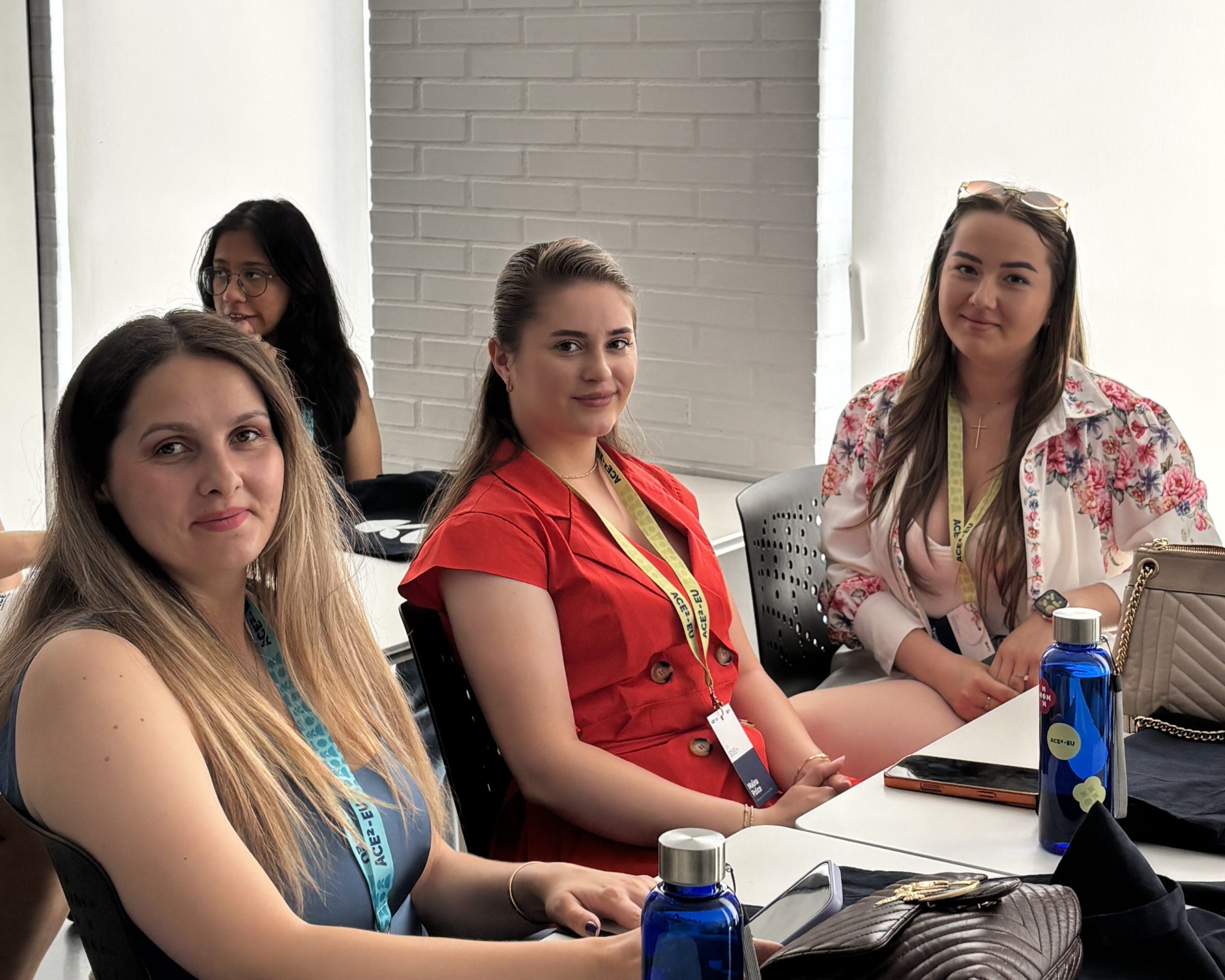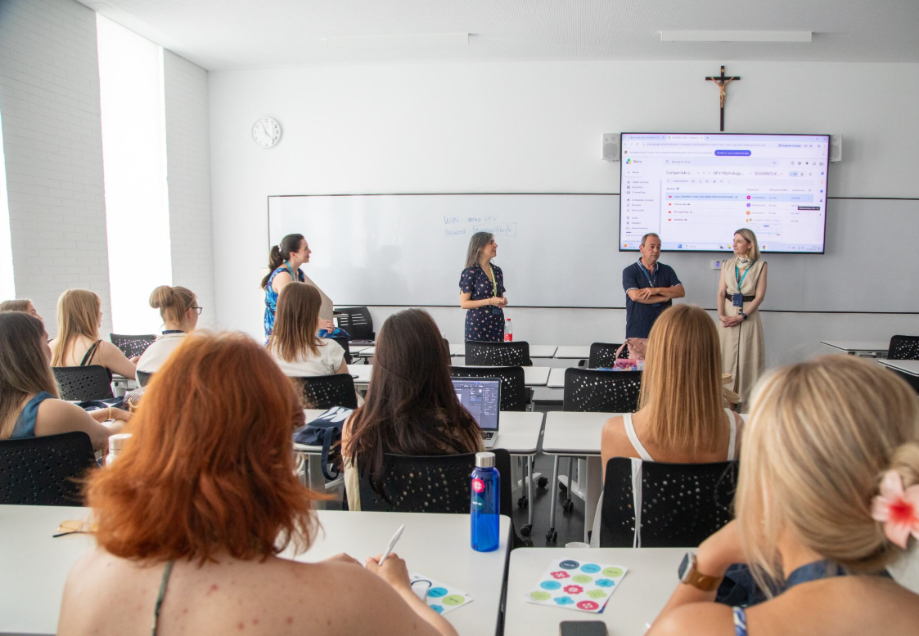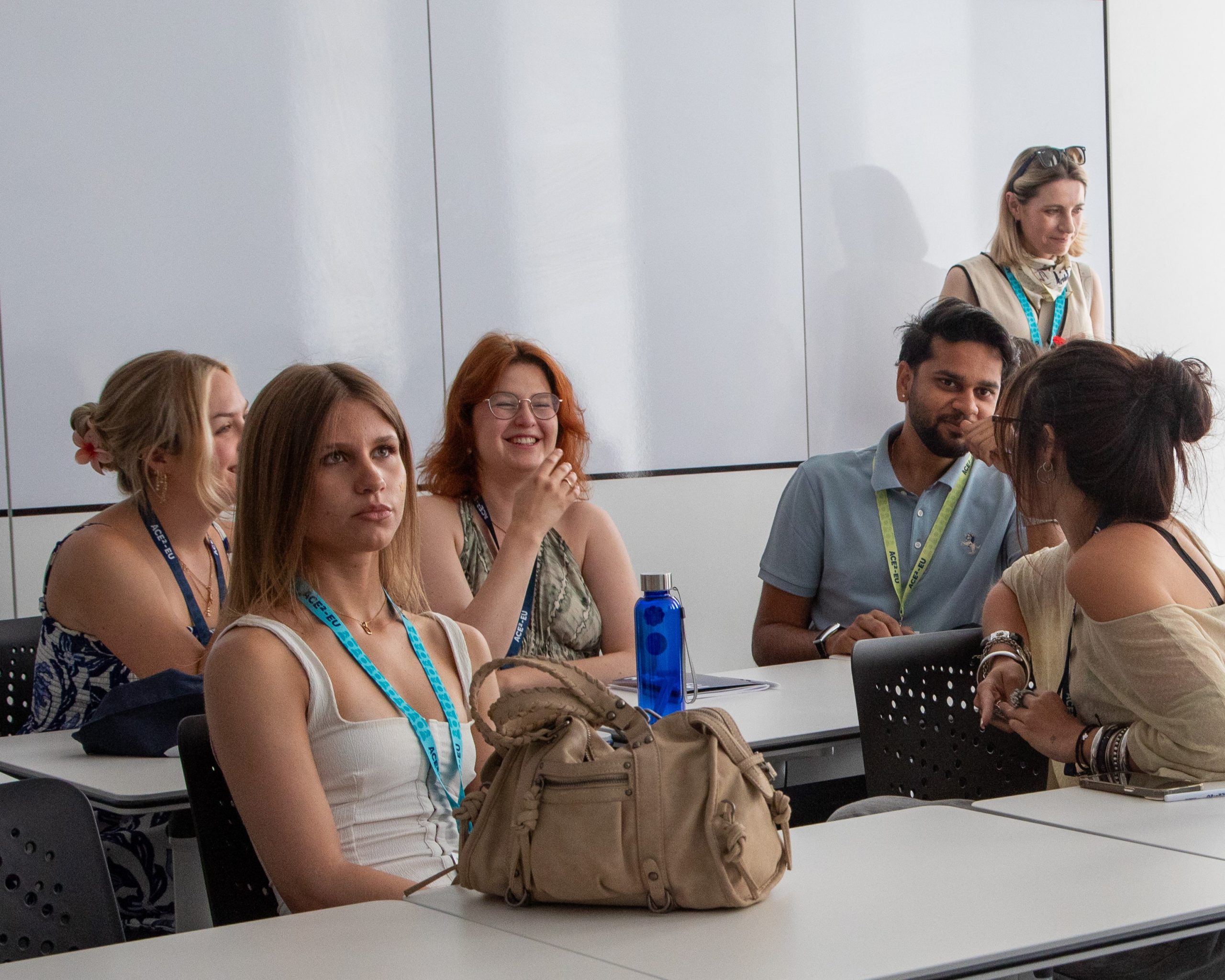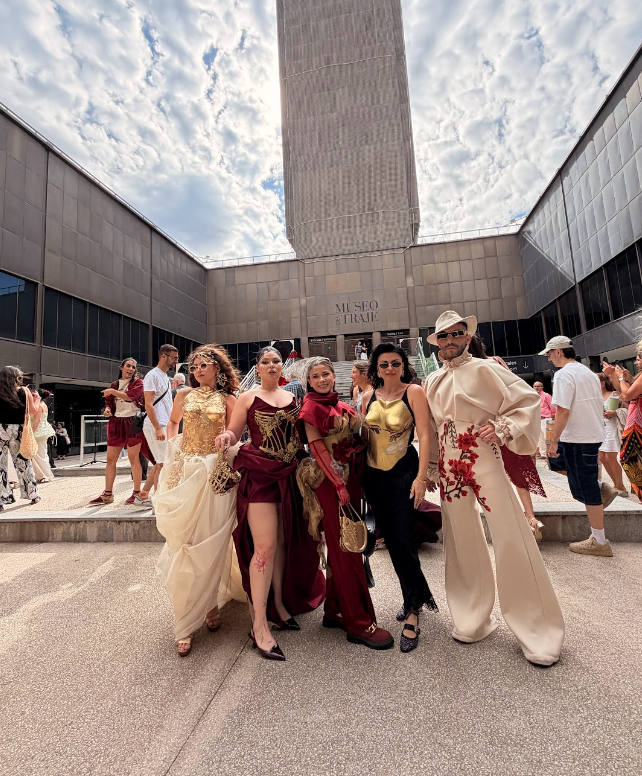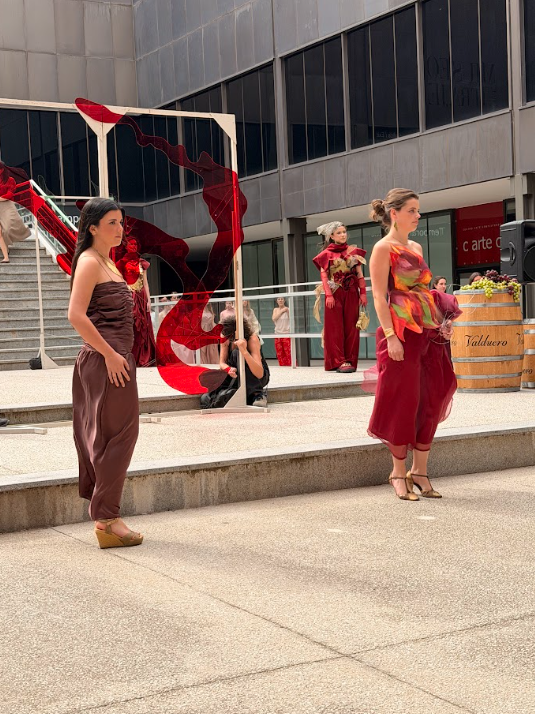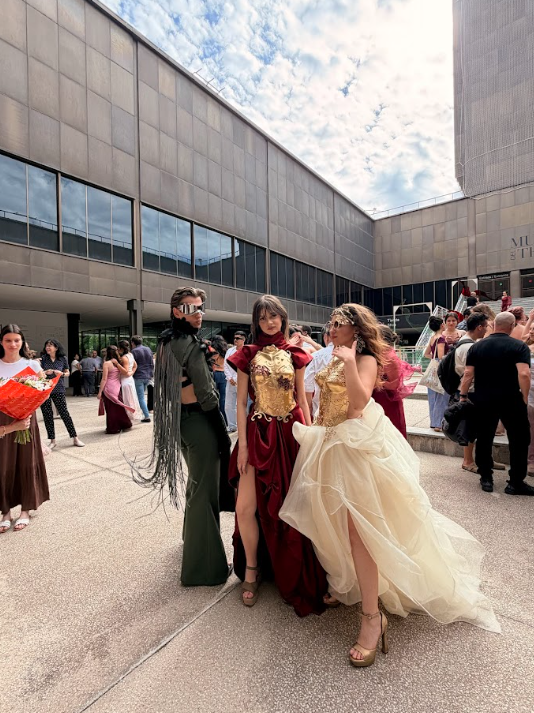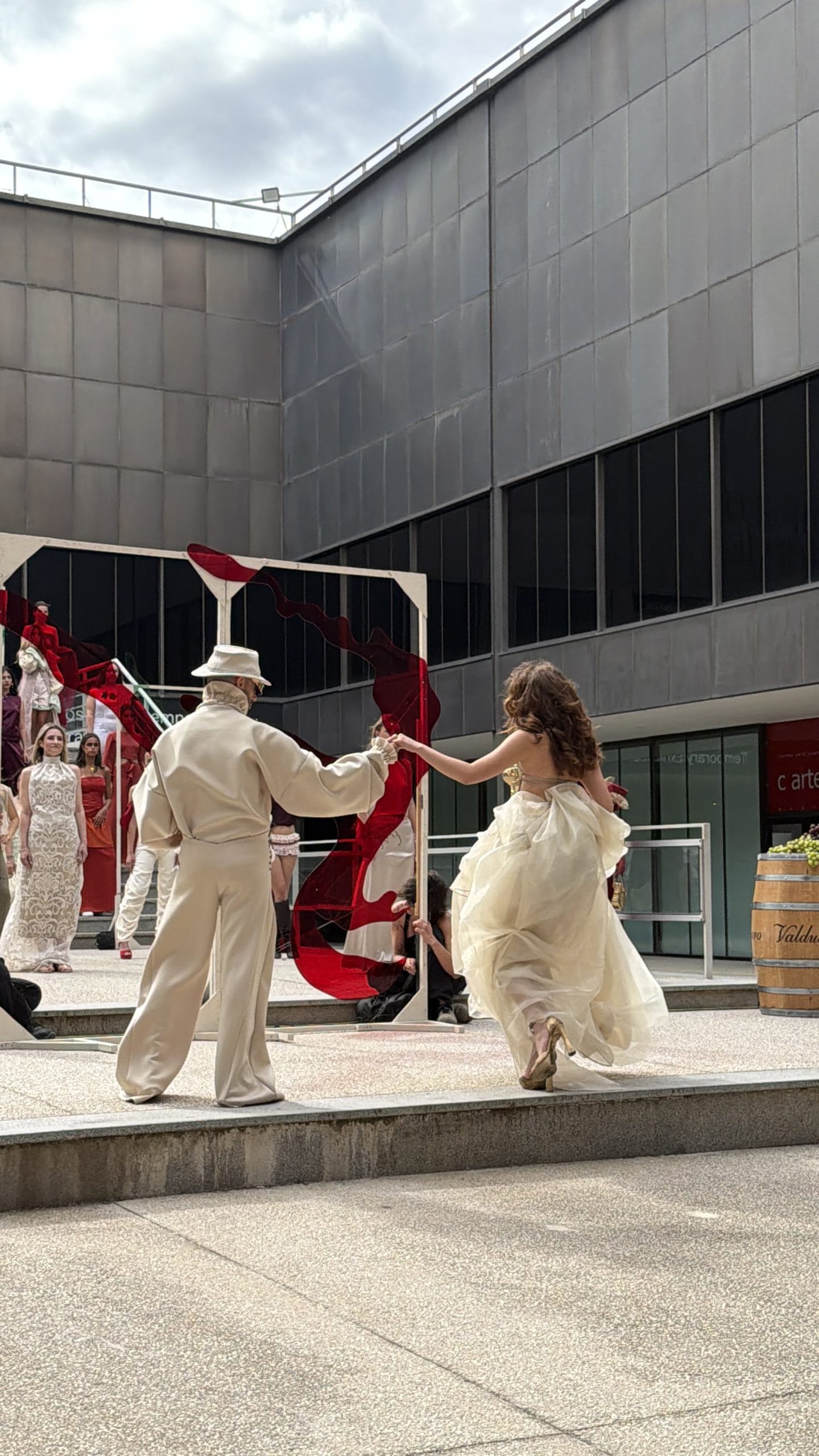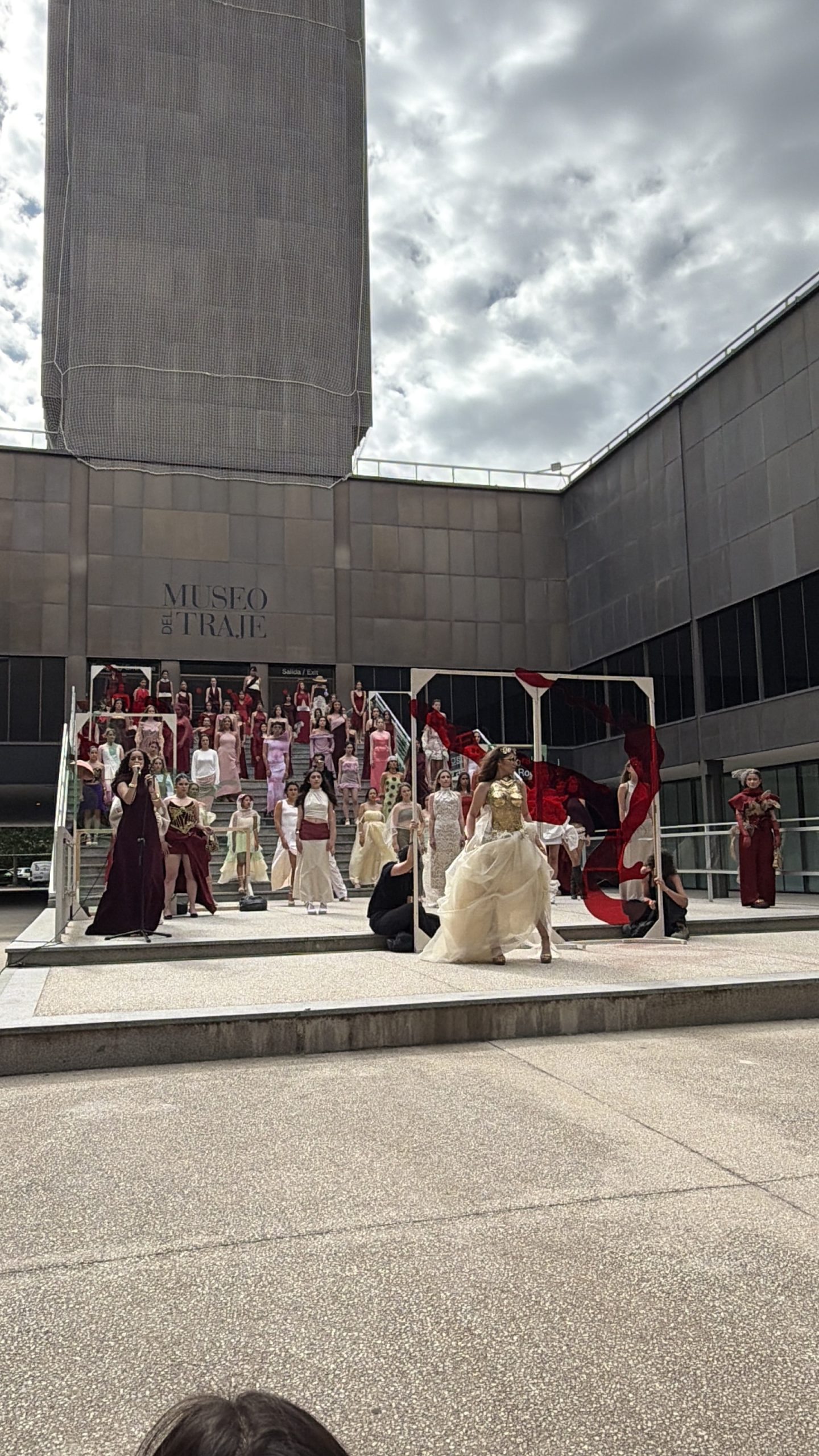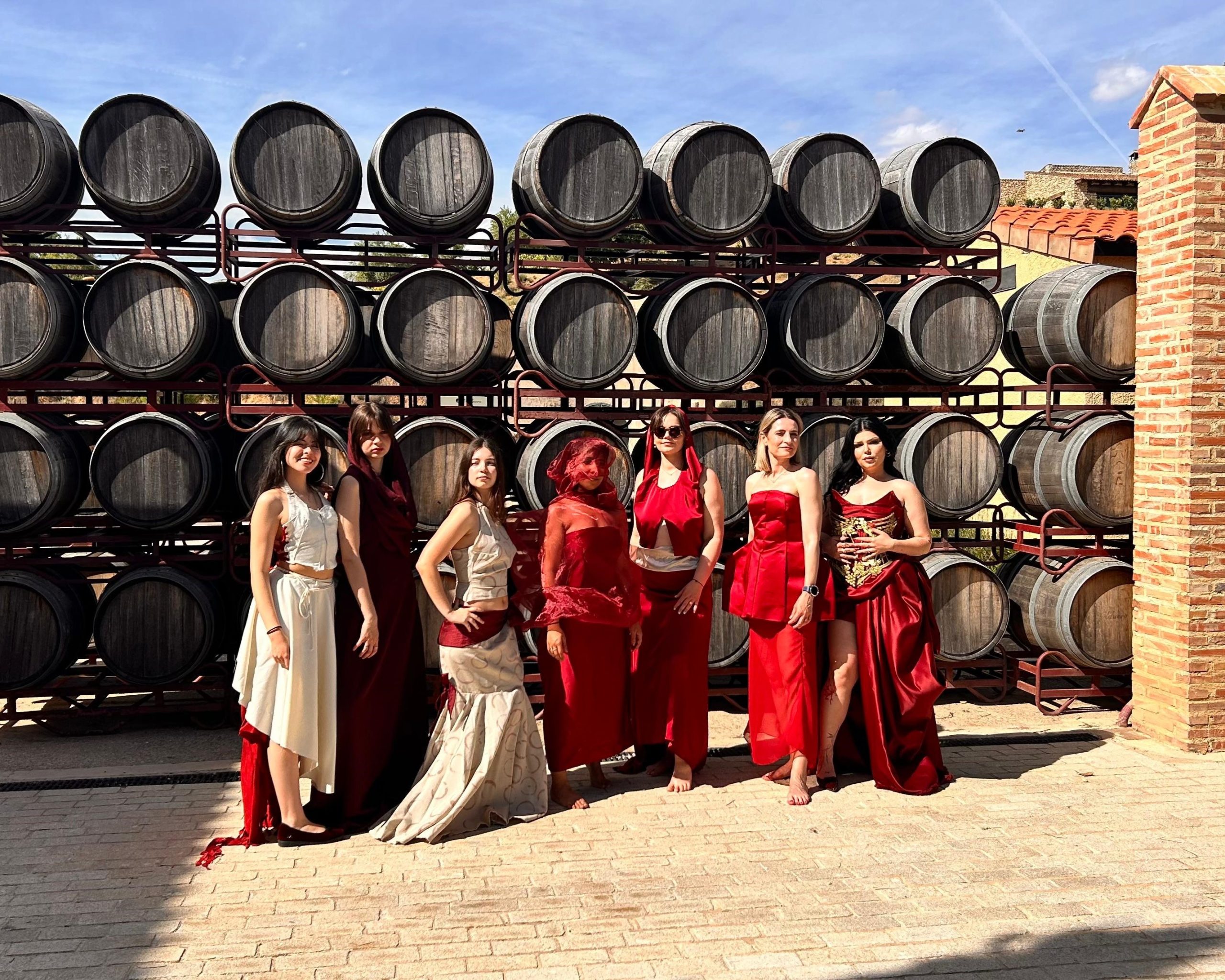
The Erasmus+ Blended Intensive Programme under the ACE²-EU Alliance brought together students and staff from five European universities in Madrid and culminated in a fashion show at the Museo del Traje
Universidad Francisco de Vitoria (UFV) led an international programme in Madrid this week, “Mythology of Wine. Fashion, Cultural Heritage and Artistic Creation,” which turned the mythology and cultural heritage of wine into contemporary fashion. Students from five European universities worked in interdisciplinary teams to explore how myth, art, and design can reconnect younger generations with the symbolic and material culture of wine.
The initiative took the form of an Erasmus+ Blended Intensive Programme (BIP) developed within the ACE²-EU university Alliance, with UFV as lead and host institution. The programme followed a blended format that combined an online preparatory phase, from April to May 2026, with an on-site week in Madrid (1–5 June), for a total workload of 85 hours.
During the online phase, participants engaged with the core themes of the course — the mythological heritage of wine, sustainability in fashion and design, and heritage activation through artistic practice — through inspiration sessions, case studies, and guided discussions, while also forming teams and shaping their first creative concepts. In Madrid, the focus shifted to hands-on, experiential learning: creative workshops, mentoring sessions, and visits to cultural institutions, where the teams translated their ideas into tangible artistic and textile proposals under the guidance of academic staff and external partners.
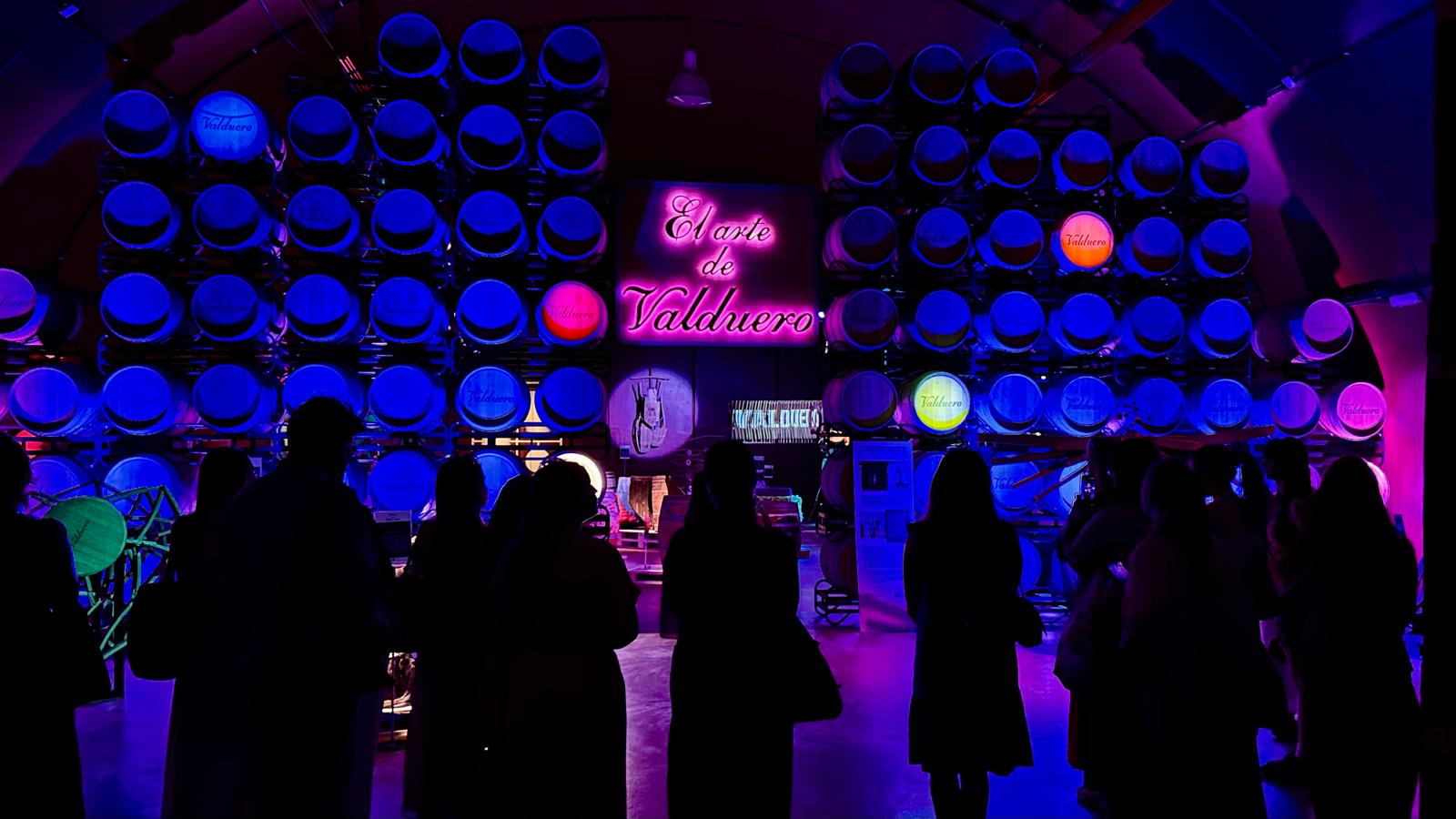
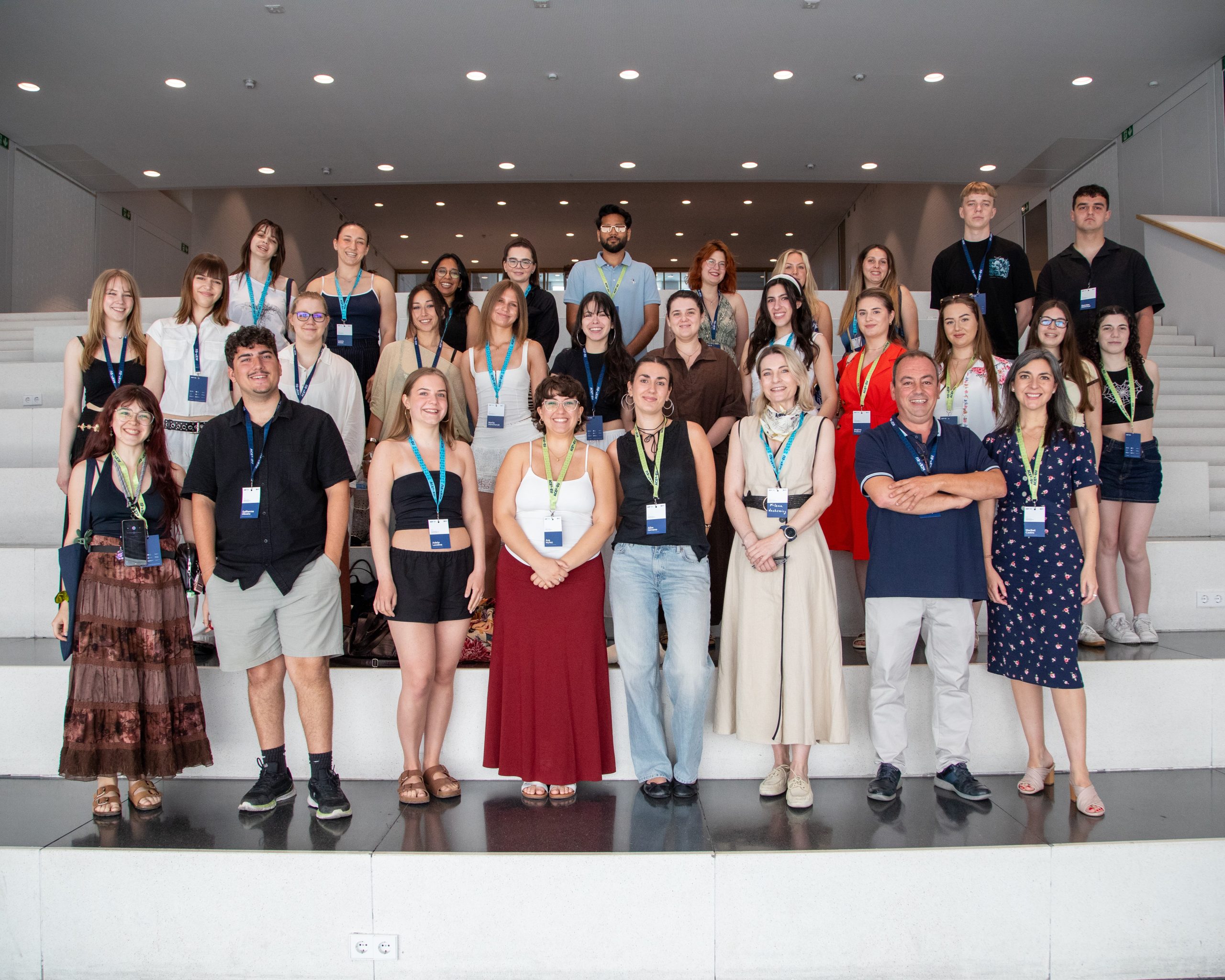
The BIP brought together academics and students from five European universities: Universidad Francisco de Vitoria (Spain), the Instituto Politécnico de Santarém (Portugal), the Medical University of Gdańsk (Poland), Technische Hochschule Ingolstadt (Germany), and Goce Delcev University of Stip (North Macedonia). Two external partners were key to anchoring the experience in real-world heritage: the Museo del Traje, the host venue, and Bodegas Valduero, which connected the creative work to the living culture of winemaking.
Beyond its artistic outcomes, the programme placed strong emphasis on personal growth and intercultural dialogue, fostering self-awareness, emotional expression, and psychological well-being through creation, alongside transversal skills such as collaboration, adaptability, and the ability to present proposals professionally. In this sense, the project reflects UFV’s commitment to the integral formation of the person and to the internationalisation of its university community.
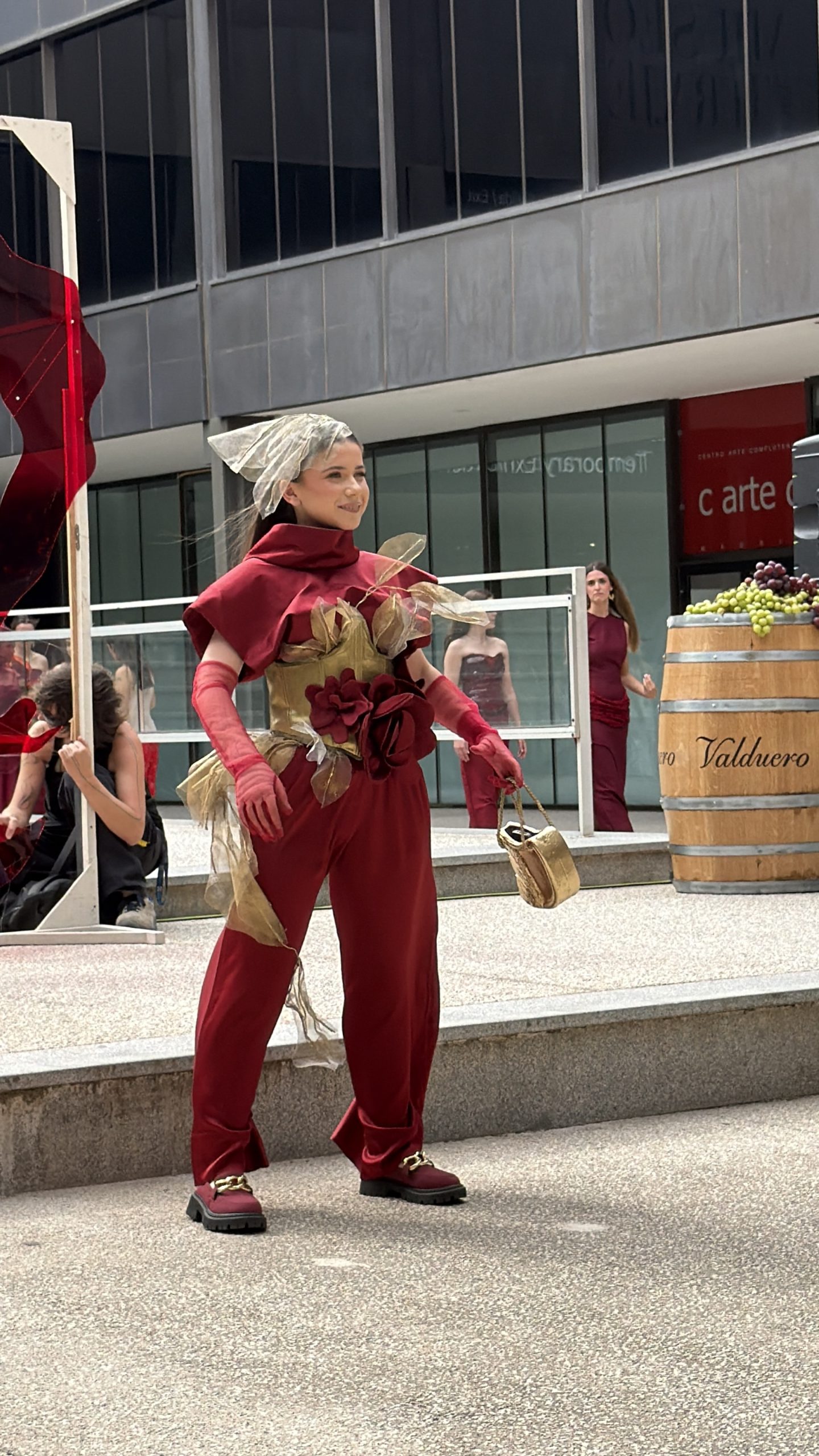
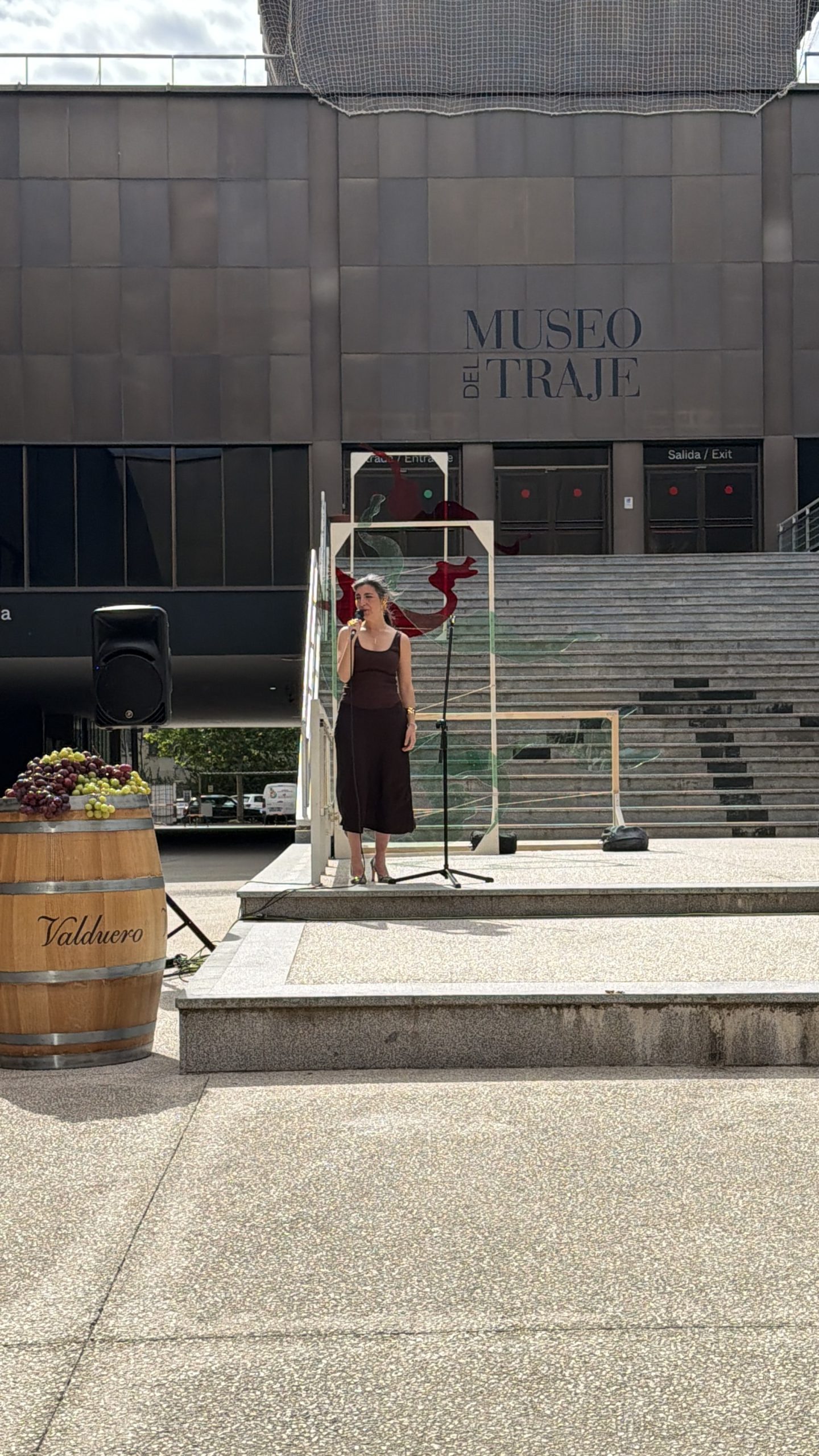
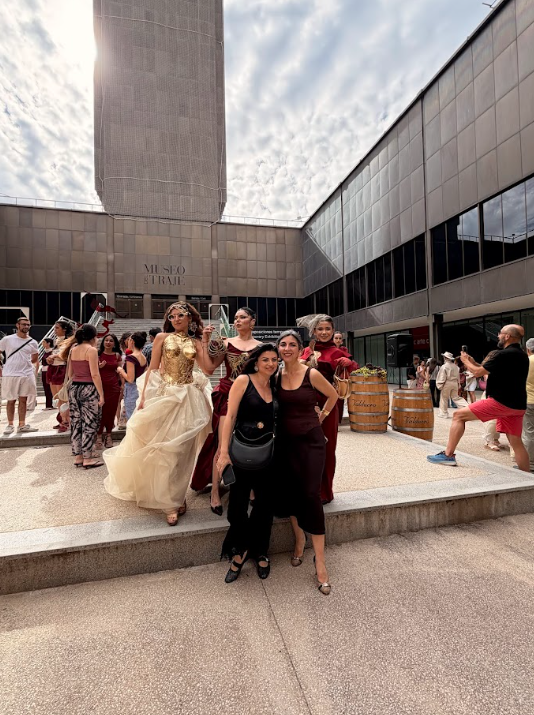
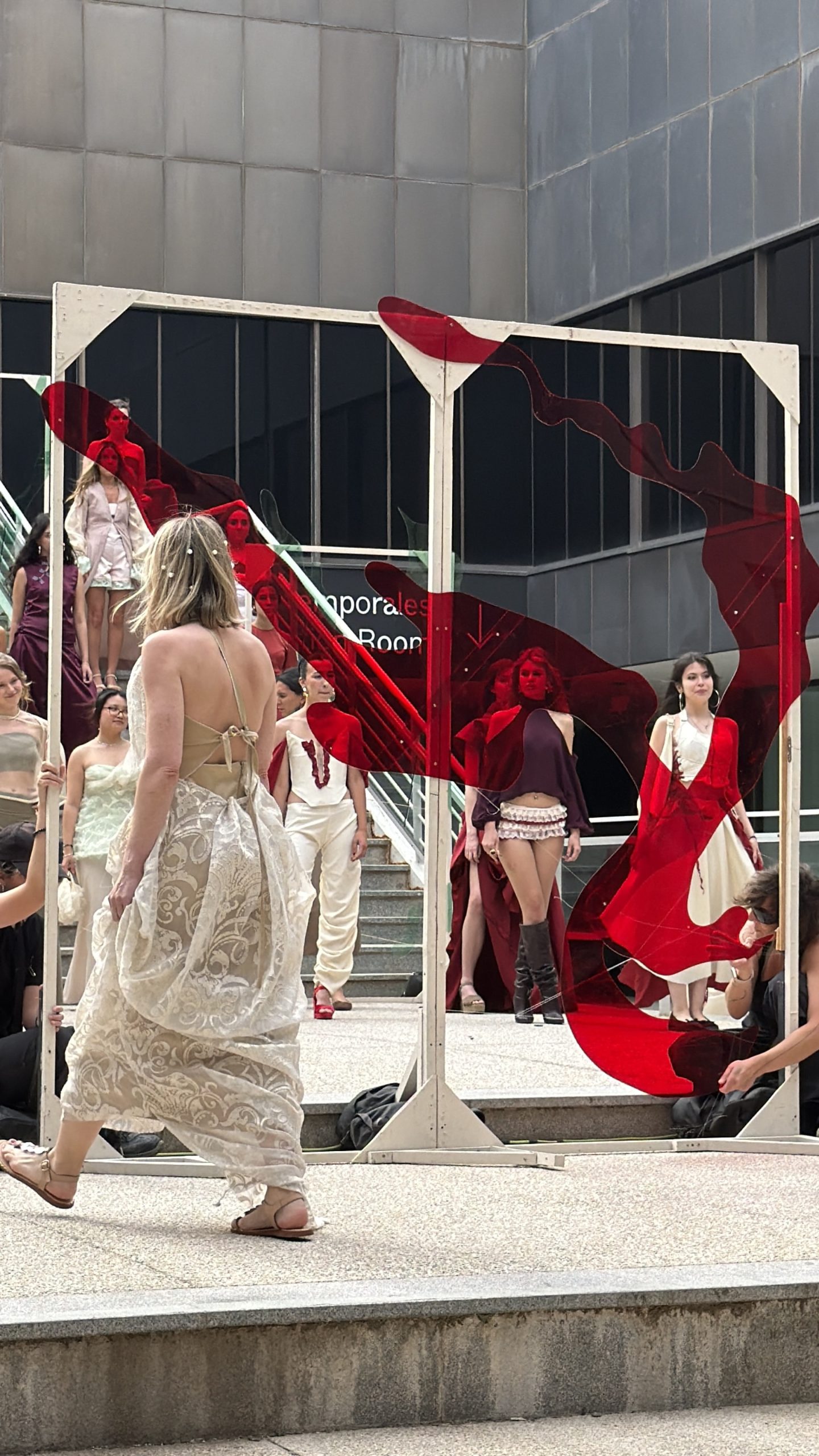
The work of these weeks culminated in a collective fashion show at the Museo del Traje, where the teams presented their proposals to peers, mentors, and cultural stakeholders. This year, the show coincided with the 14th edition of Pasarela Emerge — UFV’s flagship annual fashion event, organised by its Design degree — which adopted the very title “Mythology of Wine,” giving an international dimension to an already well-established university tradition.
“Our assessment of this edition of Pasarela Emerge and the BIP Mythology of Wine programme is very positive, above all because of the richness of the experiences shared both inside and outside the university,” says Maribel Castro, a lecturer at UFV. She highlights that the visit to Bodegas Valduero, the contact with winemaking heritage, the show at the Museo del Traje, and the encounters held throughout the week “made it possible to connect learning, culture, creativity, and community,” generating “human bonds — friendships, even — an exchange of perspectives, and a creative energy that would hardly have emerged in the classroom alone.” For Castro, “that dialogue between university and society, between heritage and the contemporary, and the value of the experiential, has been one of the great achievements of this edition.”
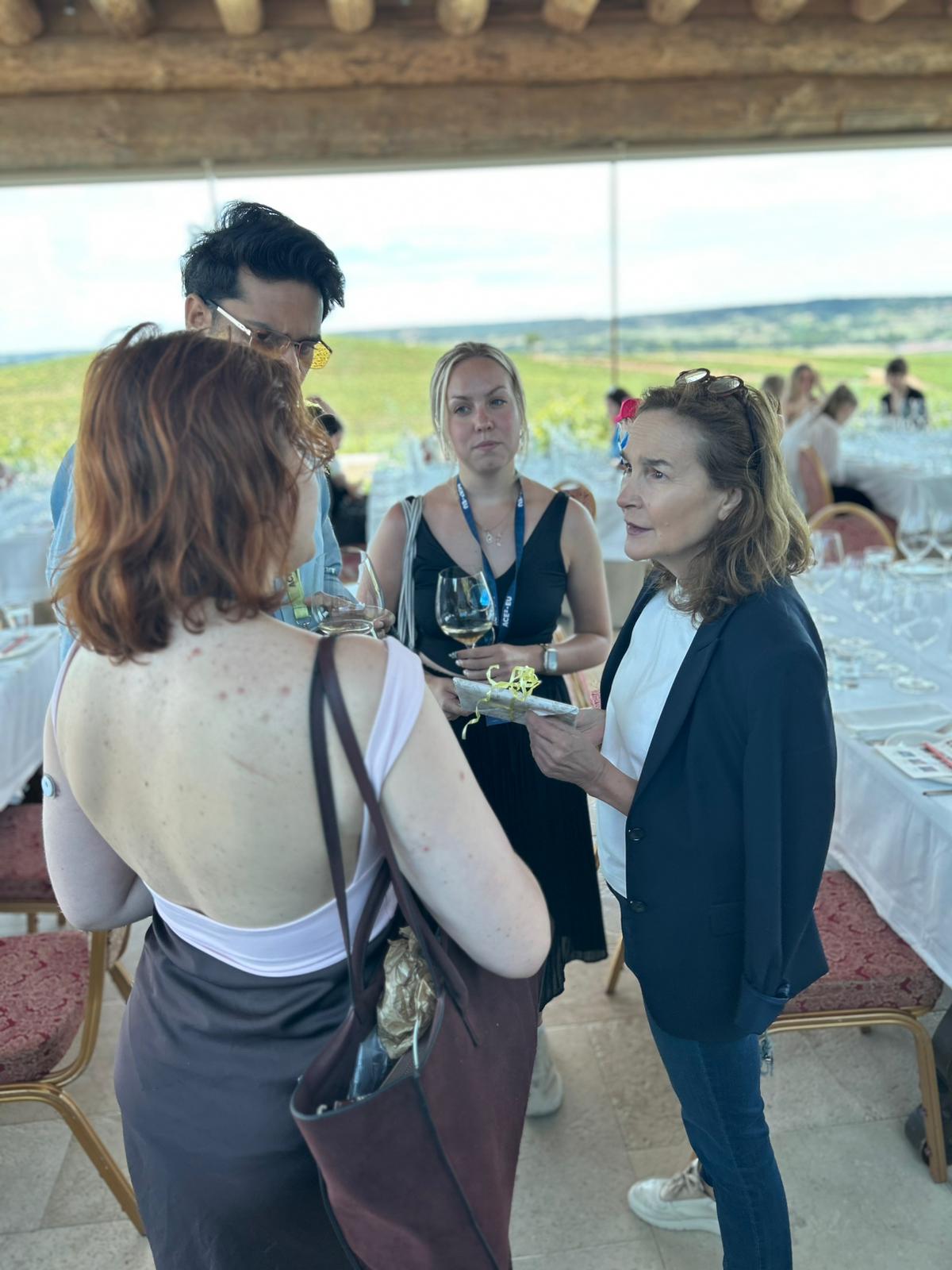
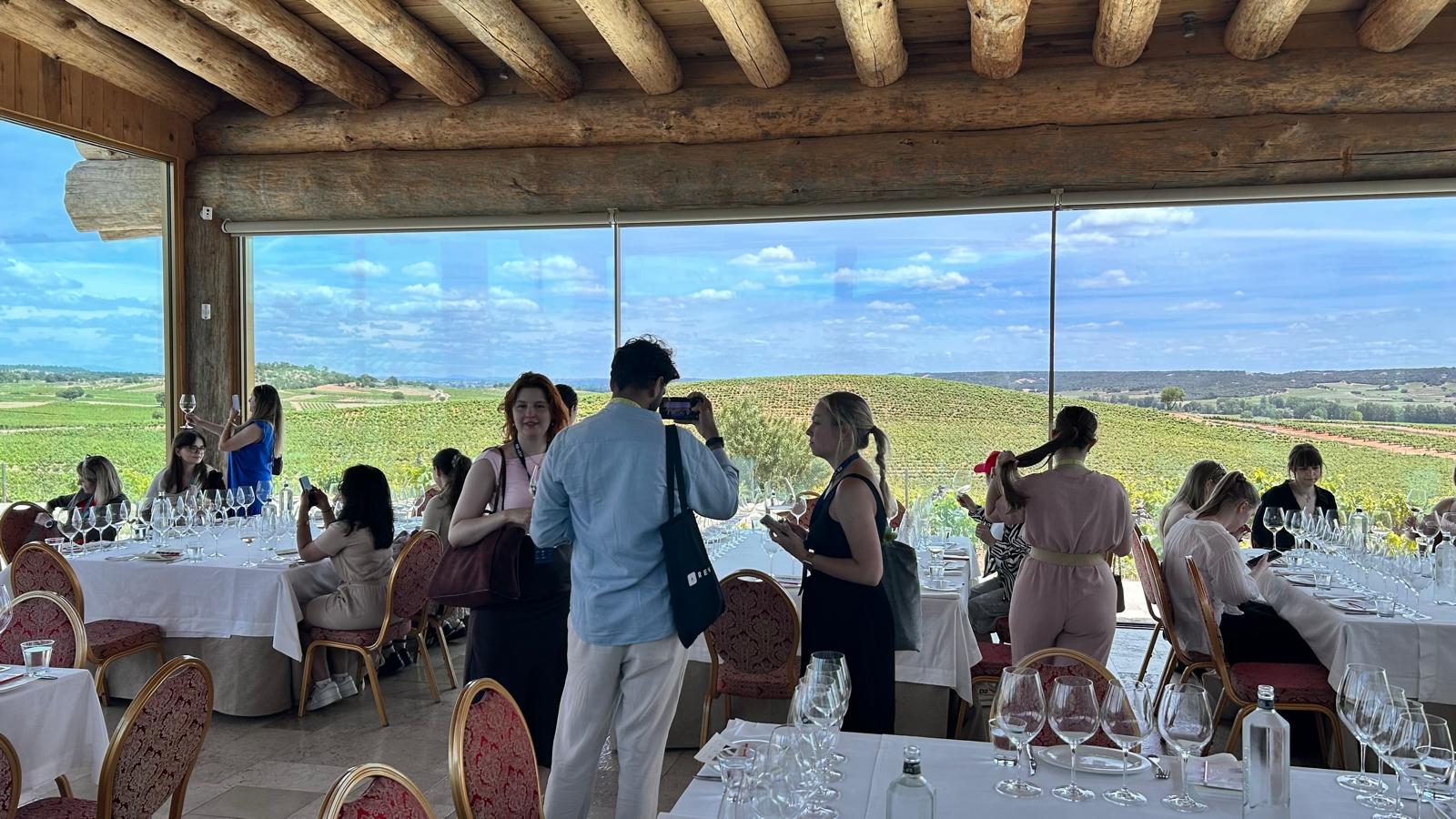
That view is shared by staff from the partner universities. “We are very happy to be part of this big event. It was very expressional for all ACE students. It’s such an inspirational day for all of us, filled with joy and happiness — we definitely need more projects like this in the future,” says Sanja Risteski, a lecturer at Goce Delcev University of Stip (North Macedonia). She also points to the photoshoot held at Bodegas Valduero: “Students were so inspired and creative! I am so happy to see so much creative work in one place… Students did an amazing job.”
The students themselves echo the value of the experience. “I decided to create something I think I will never have the opportunity to create again, and I am so grateful for that — it’s crazy! I am also thankful for meeting tons of people,” says one of the participants [Catalina Sofía Hampel, UFV]. Another student highlighted the cultural outing: “I loved the visit to Bodegas Valduero because it gave me the opportunity to meet new people, share with them, and discover a new place” [Nina Tomaszewska, MUG].
With the mobility week now concluded, students enter a final phase of online reflection and evaluation, consolidating their learning and communicating the results of their work. Those who complete at least 80% of the activities and demonstrate active engagement and achievement of the learning objectives will earn ECTS credits for their home institutions.
For UFV and its ACE²-EU partners, “Mythology of Wine” stands as an example of how creativity, heritage, and international collaboration can come together to give students a platform for their talent — and a fresh way of looking at one of Europe’s oldest cultural traditions.