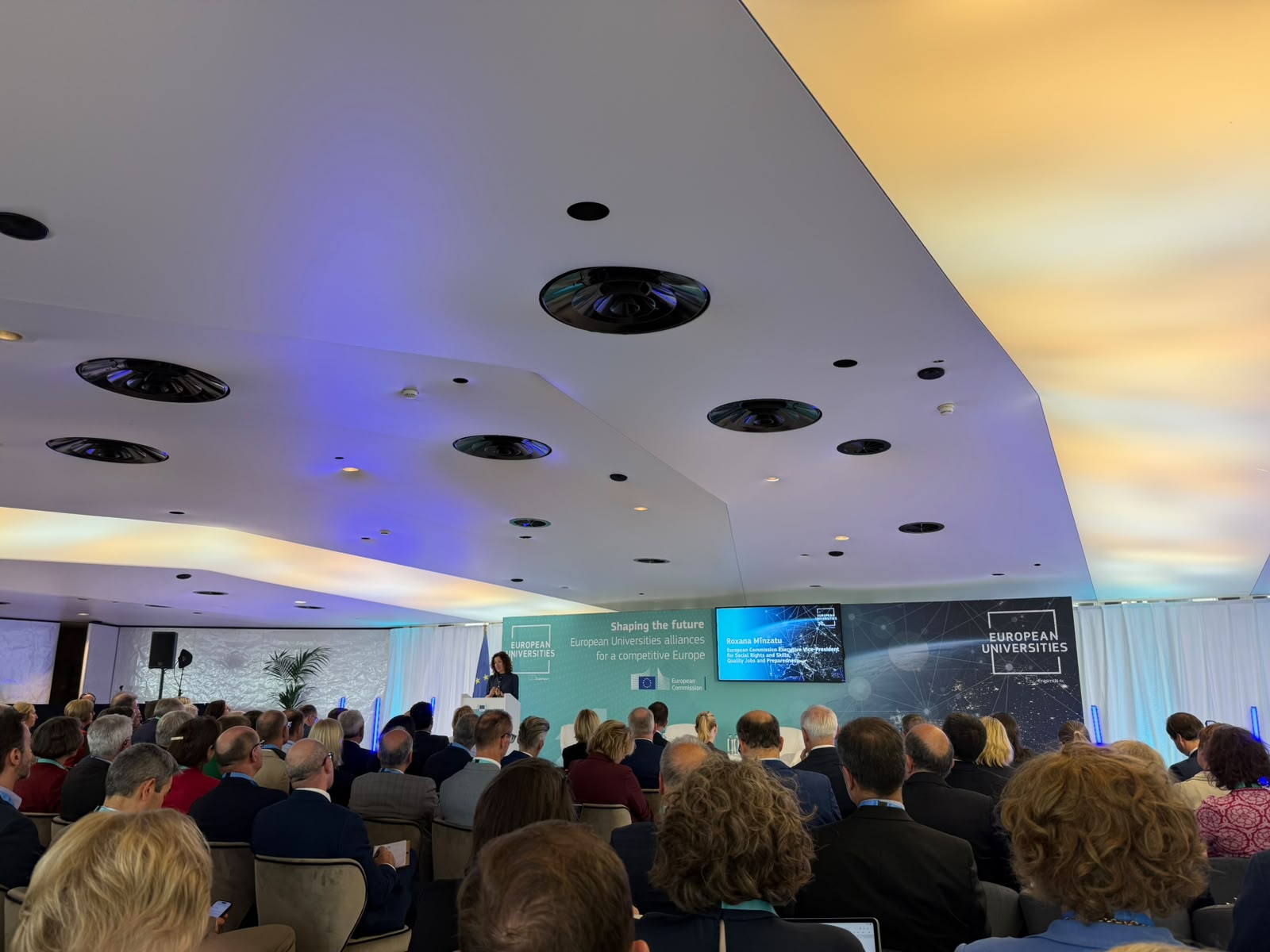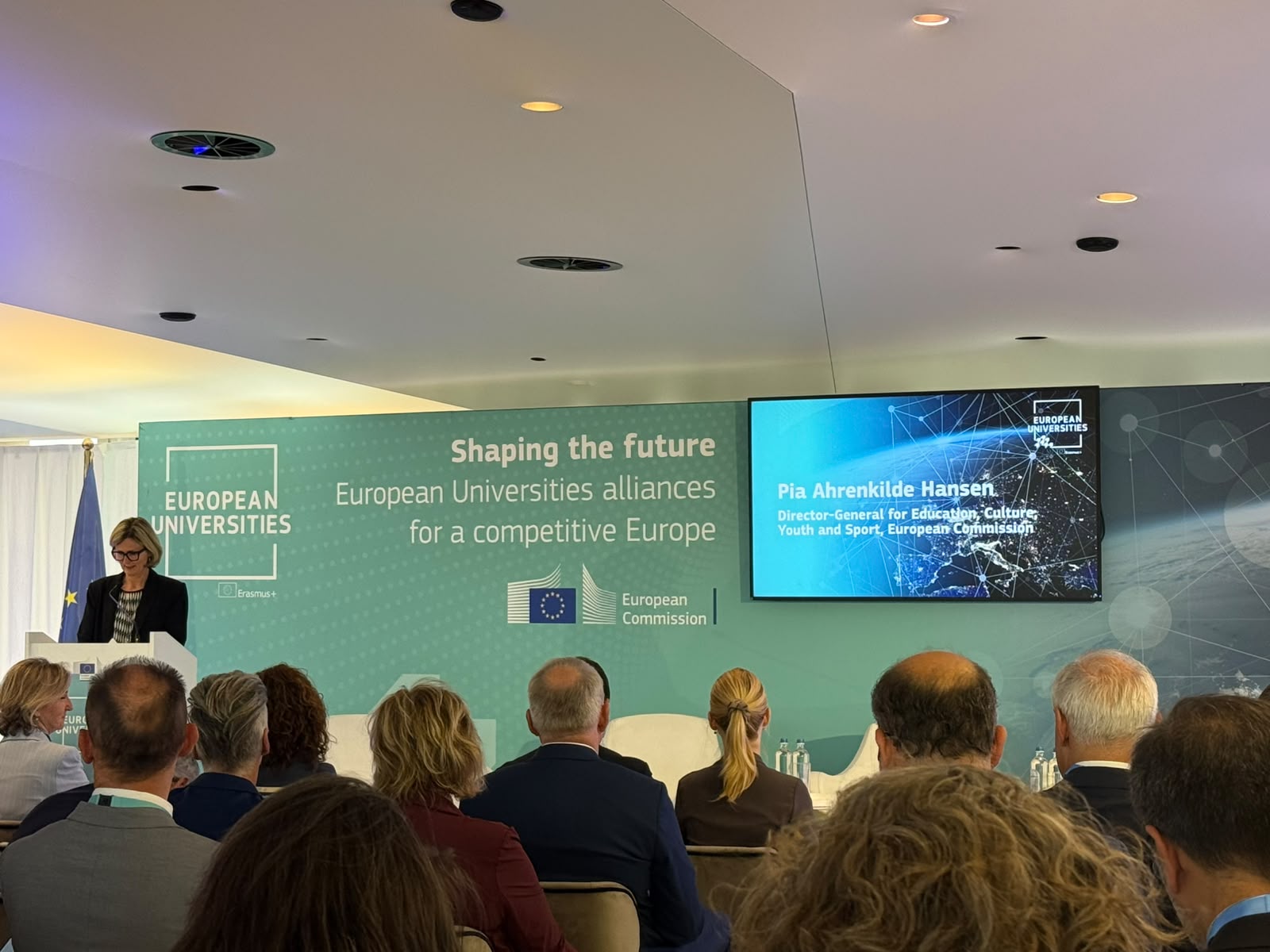
A high-level meeting of European Universities Rectors and Presidents was held in Brussels on 10 June 2026, bringing together institutional leaders from European Universities alliances to discuss the future of the European Universities initiative and its contribution to innovation, competitiveness and the transformation of higher education in Europe.
The meeting was hosted by Roxana Mînzatu, Executive Vice-President of the European Commission for Social Rights and Skills, Quality Jobs and Preparedness. As the European Commission places education at the forefront of its agenda, the discussions focused on the future strategy for European Universities alliances, their crucial role in boosting Europe’s competitiveness, and international collaboration in higher education, including the deployment of the European Degree Label, an initiative aimed at enhancing the quality and recognition of joint degree programmes across Europe.
Around 150 Rectors and Presidents, representing 65 European Universities alliances and eight Seal of Excellence alliances, took part in the discussions. The meeting also addressed the role of alliances in strengthening the European Education Area, advancing the Union of Skills, and contributing to the development of the Single Market’s fifth freedom for knowledge and innovation.
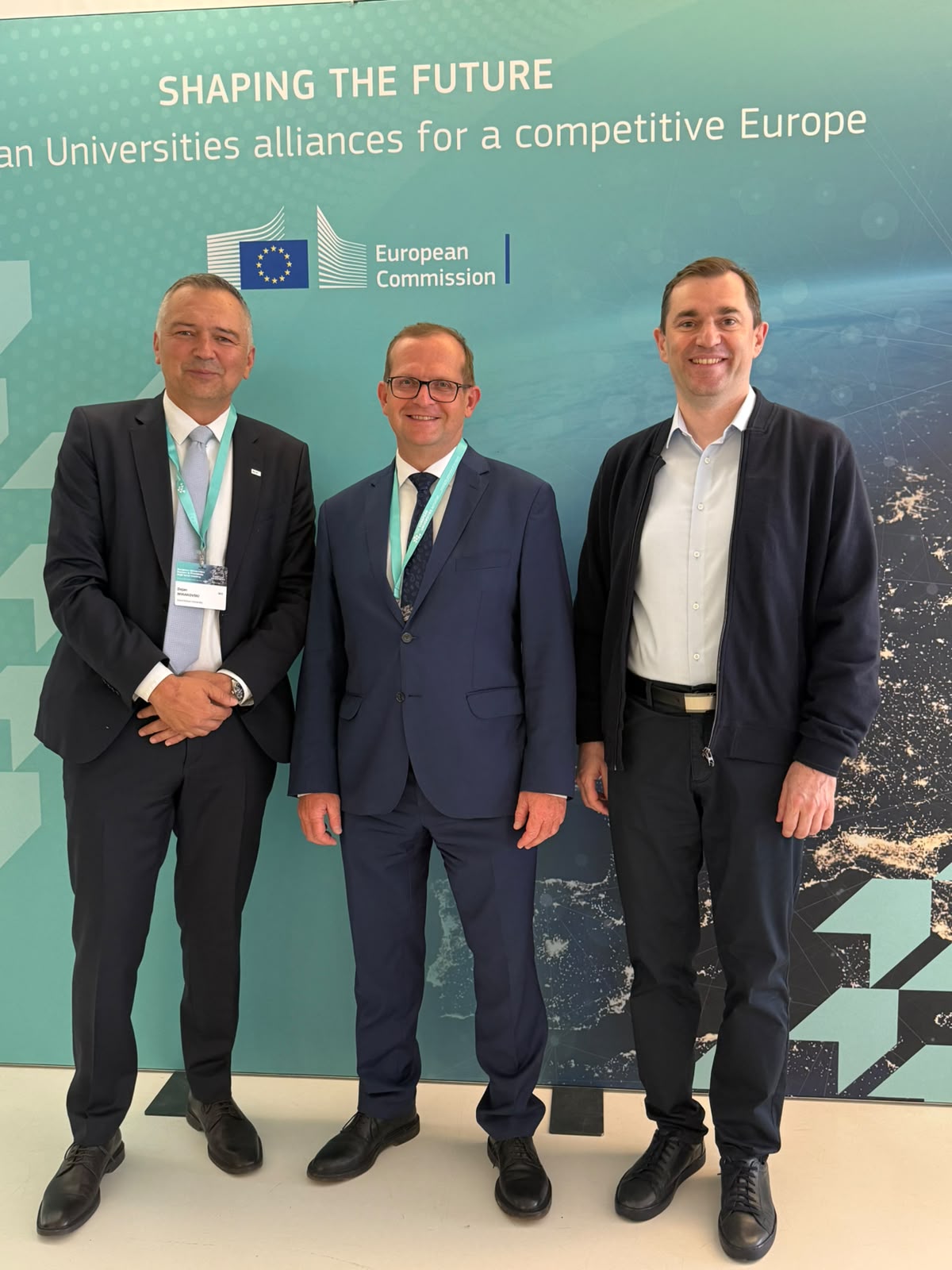
The ACE2-EU Alliance was presented by Prof. Dr. Dejan Mirakovski, Rector of Goce Delcev University – Stip, Prof. Dr. Sašo Koceski, Vice-Rector of Goce Delcev University – Stip, and Prof. Dr. Michał Markuszewski, Rector of the Medical University of Gdańsk.
Through its participation, ACE2-EU reaffirmed its commitment to building an applied, connected, entrepreneurial and engaged European University, strengthening cooperation among universities, students, researchers, staff and societal partners across Europe, while contributing to excellence, inclusiveness, territorial cohesion, democracy, social fairness and sustainable cooperation across borders, disciplines, languages and cultures.