
Seven new light art concepts for Riga’s urban environment have been developed by 47 students from ACE²-EU partner universities, who gathered at the Latvian Academy of Culture (LAC) last week to take part in the first ACE²-EU micro-learning programme of the academic semester — Flavour School “Urban Future Public Space LAB: Art, Design and Technology for People”. Over five intensive days, international and interdisciplinary student teams worked alongside light artists, experts and mentors to explore Riga’s urban environment and develop concepts with the potential to become part of the Staro Rīga Light Festival in the future.
The programme was developed by Elizabete Palasiosa, Director of the Bachelor’s Programme in Creative Industries at LAC and a creative entrepreneur, in collaboration with the Latvian Academy of Culture, colleagues from ACE²-EU partner universities and the Staro Rīga Light Festival.
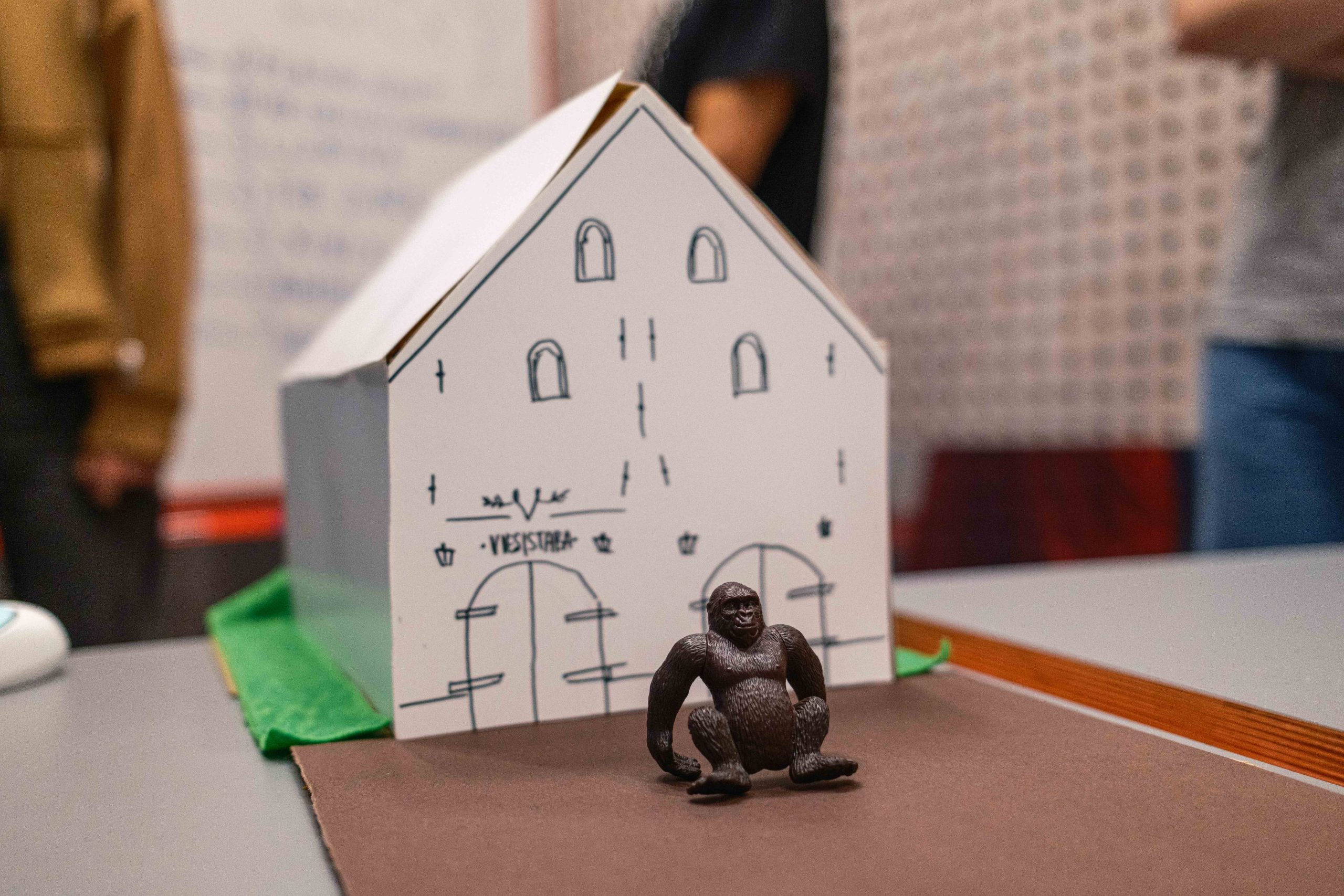
Over five intensive working days, students in seven interdisciplinary teams explored light as a medium of artistic expression and gained both theoretical and practical knowledge of developing light installations. The students explored Riga’s urban environment, analysing potential locations for light art interventions, developing their artistic concepts and creating prototypes of their ideas under the guidance of mentors. At the end of the week, the seven student teams presented their concepts and technical solutions, demonstrating how interdisciplinary and international collaboration can transform ideas into concrete artistic proposals within a short and intensive creative process.
Diāna Čivle, curator of the Staro Rīga Light Festival and Director of the Latvian College of Culture, highlights the potential of the ideas developed during the programme:
“I believe this project was unexpectedly creative and highly productive. It resulted in seven ideas that could genuinely be realised as part of the Staro Rīga Light Festival. I think the students discovered not only how diverse light can be as an artistic medium, but also the ‘behind-the-scenes’ side of creating a project — the invisible work, knowledge and technical challenges involved in bringing a light installation to life. From the perspective of concept development, this was an invaluable experience.
I was particularly impressed by how quickly and closely the teams came together. It was exciting to see their artistic ideas develop, how the students created together, discussed and even disagreed, and how openly they embraced the different insights and suggestions offered by the mentors. Overall, I believe the project was highly valuable not only for the students, but also for the mentors.”
One of the programme’s experts, internationally recognised Budapest-based projection mapping artist László Bordos, sees working with students not only as an opportunity to share his professional experience, but also as a source of new inspiration. Encounters with younger generations allow him to discover what they are interested in, how they think and how they approach creative challenges.
“What surprised me here was the diversity of approaches. Each team developed something completely different, whereas in many workshops I have experienced more schematic ways of thinking. Here, every team found its own direction, and some of the outcomes are already very promising and professional. It is refreshing to see this kind of quality and commitment in the younger generation,” said Bordos.
The artist will return to Riga in November, when his projection artwork will illuminate the building of the National Library of Latvia as part of Staro Rīga 2026.
Baiba Freimane, ACE²-EU Work Package 2 Lead at the Latvian Academy of Culture, emphasises that one of the programme’s key strengths is the opportunity for students to move beyond the boundaries of their usual academic environment and discipline:
“Participation in ACE²-EU micro-learning programmes offers students an excellent opportunity to step outside their usual academic environment, work in international teams and engage with different disciplines and perspectives. This programme demonstrated particularly clearly how moving beyond the familiar boundaries of one’s field of study can open up new creative and artistic approaches. Today’s world demands dynamism, the ability to respond quickly and to adapt, and the ACE²-EU collaboration network creates an environment in which these skills can be developed through practice.”
Diāna Čivle also encourages students to make the most of the opportunities offered by international collaboration: “In my view, ACE²-EU programmes are an excellent opportunity to gain new and broader experience and to see things from different perspectives. Take part in mobility opportunities!”
LAC students are encouraged to follow upcoming ACE²-EU micro-learning programmes and apply for international mobility opportunities. Further information about current programmes and applications is available on the ACE²-EU Latvia website.
Funded by the European Union. Views and opinions expressed are, however, those of the author(s) only and do not necessarily reflect those of the European Union or the European Education and Culture Executive Agency (EACEA). Neither the European Union nor the granting authority can be held responsible for them. Project No. 101177596.