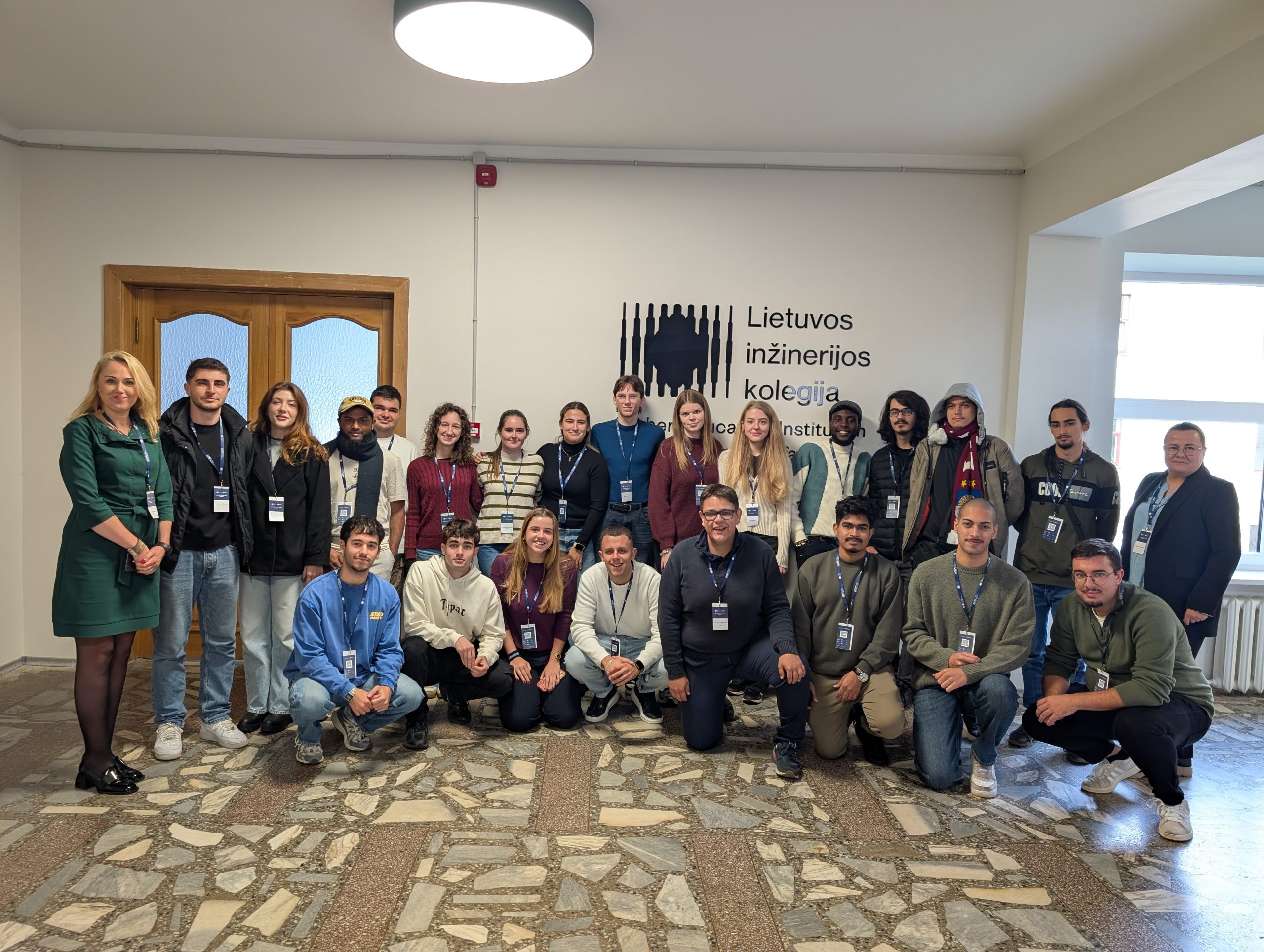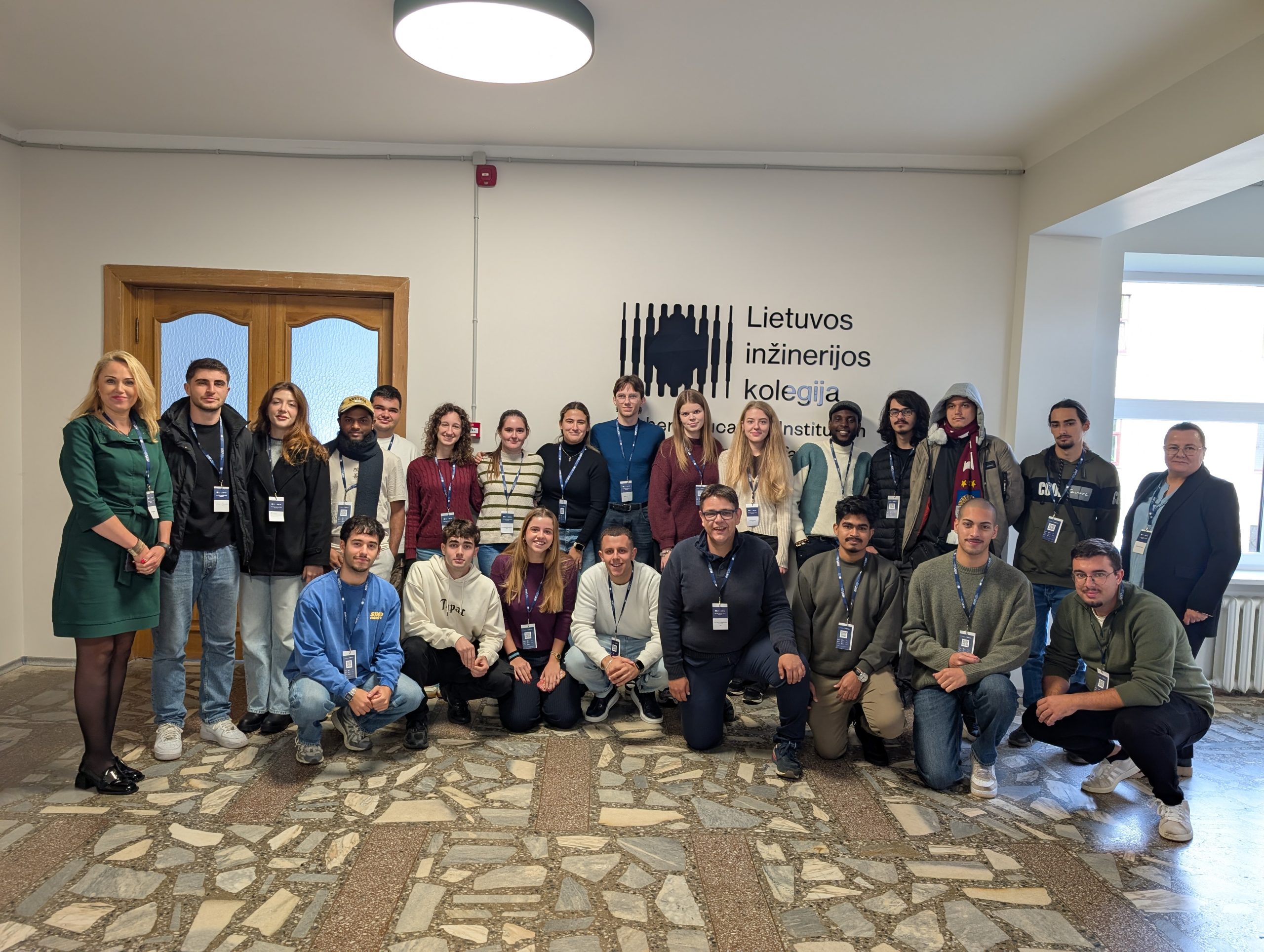
From 12 to 16 October 2026, Lietuvos inžinerijos kolegija (LIK) is hosting the ACE²-EU Applied Blended Challenge (ABC) Programme “Cities That Care: Flood Resilience”. The international programme brings together students from ACE²-EU partner institutions to explore the impacts of climate change, assess flood risks and develop approaches to strengthening the resilience of cities and communities.
The programme combines theoretical knowledge with practical activities, field observations and international collaboration, encouraging students to address real-world environmental challenges through an interdisciplinary perspective.
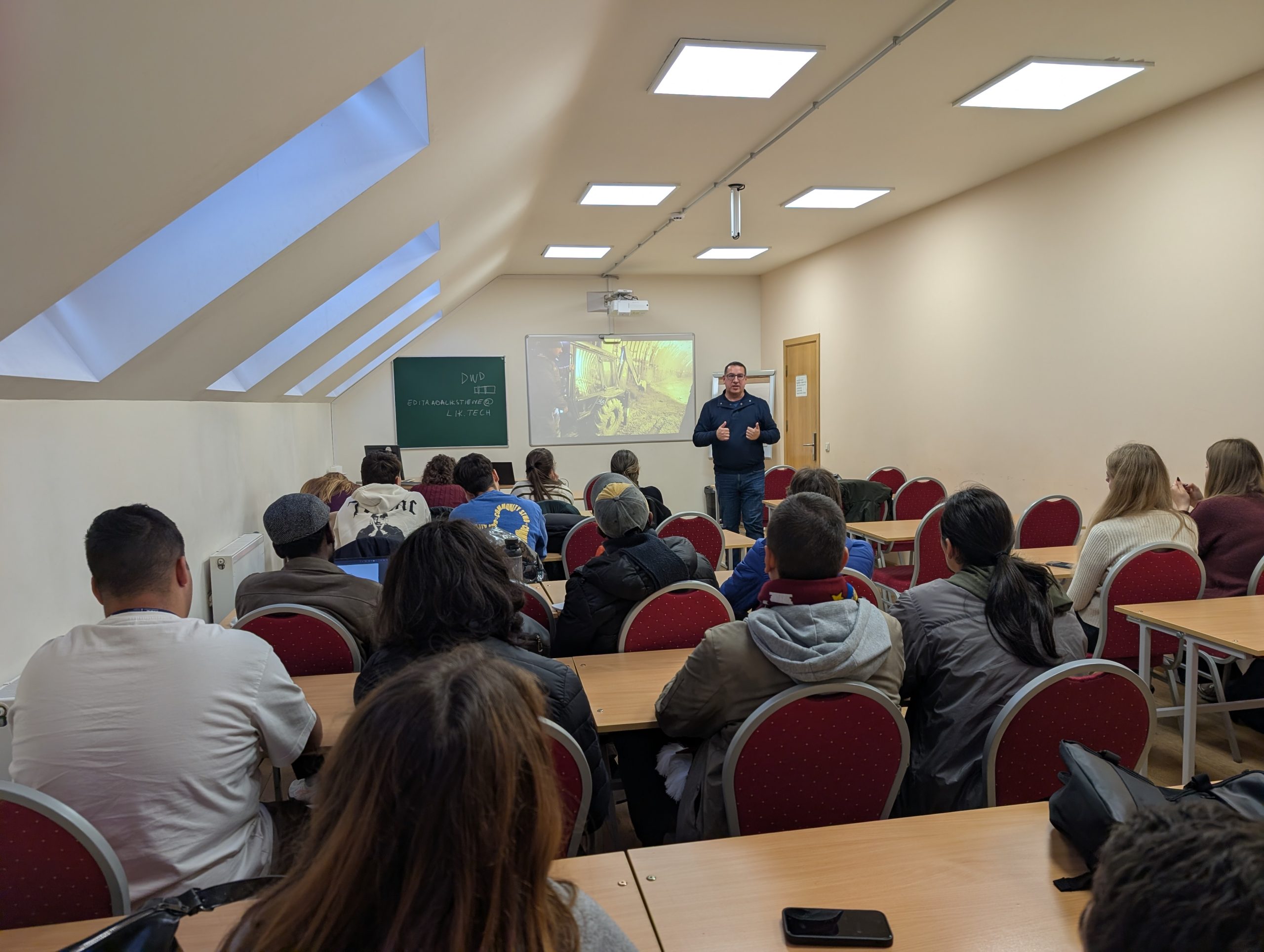
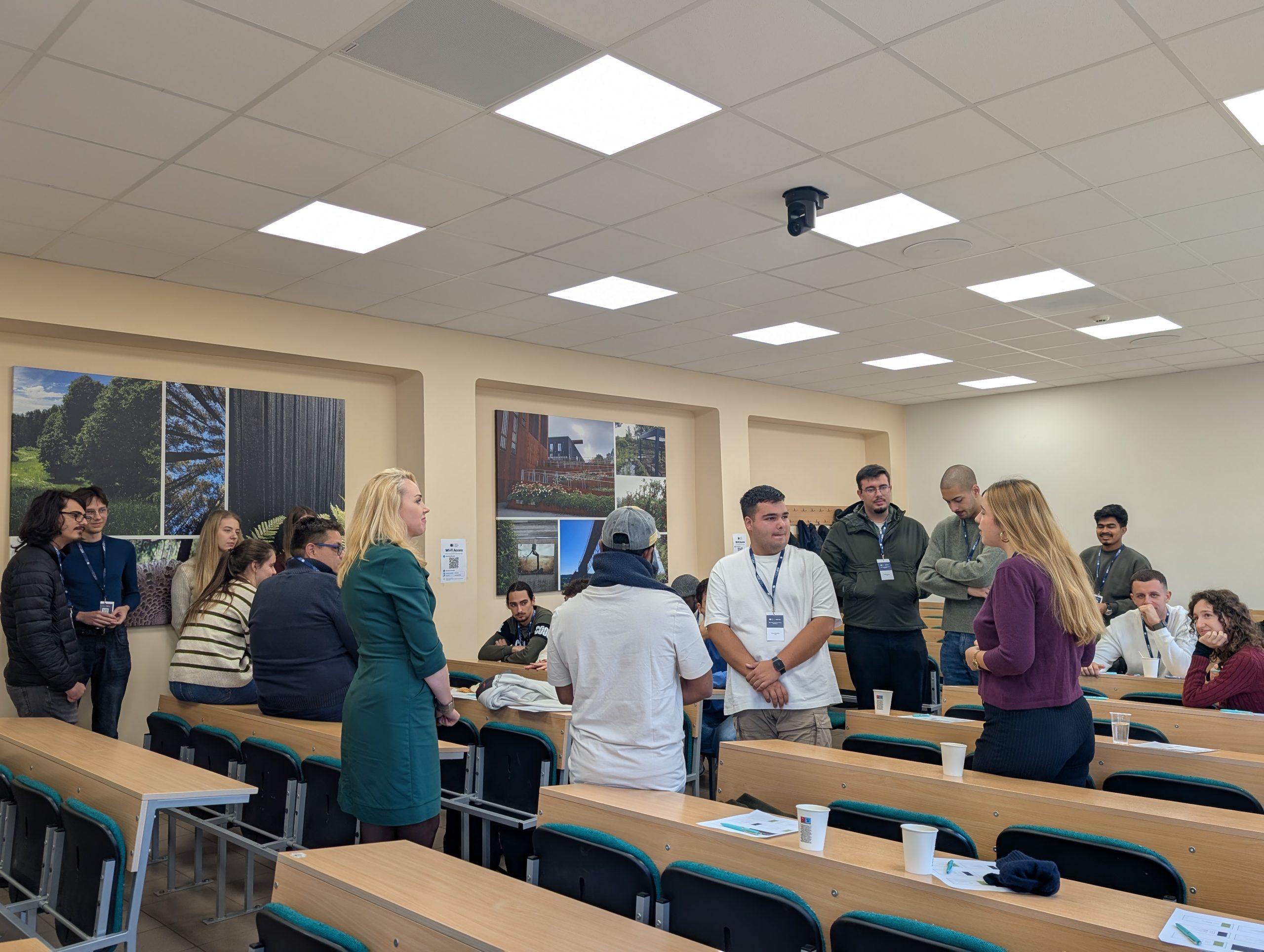
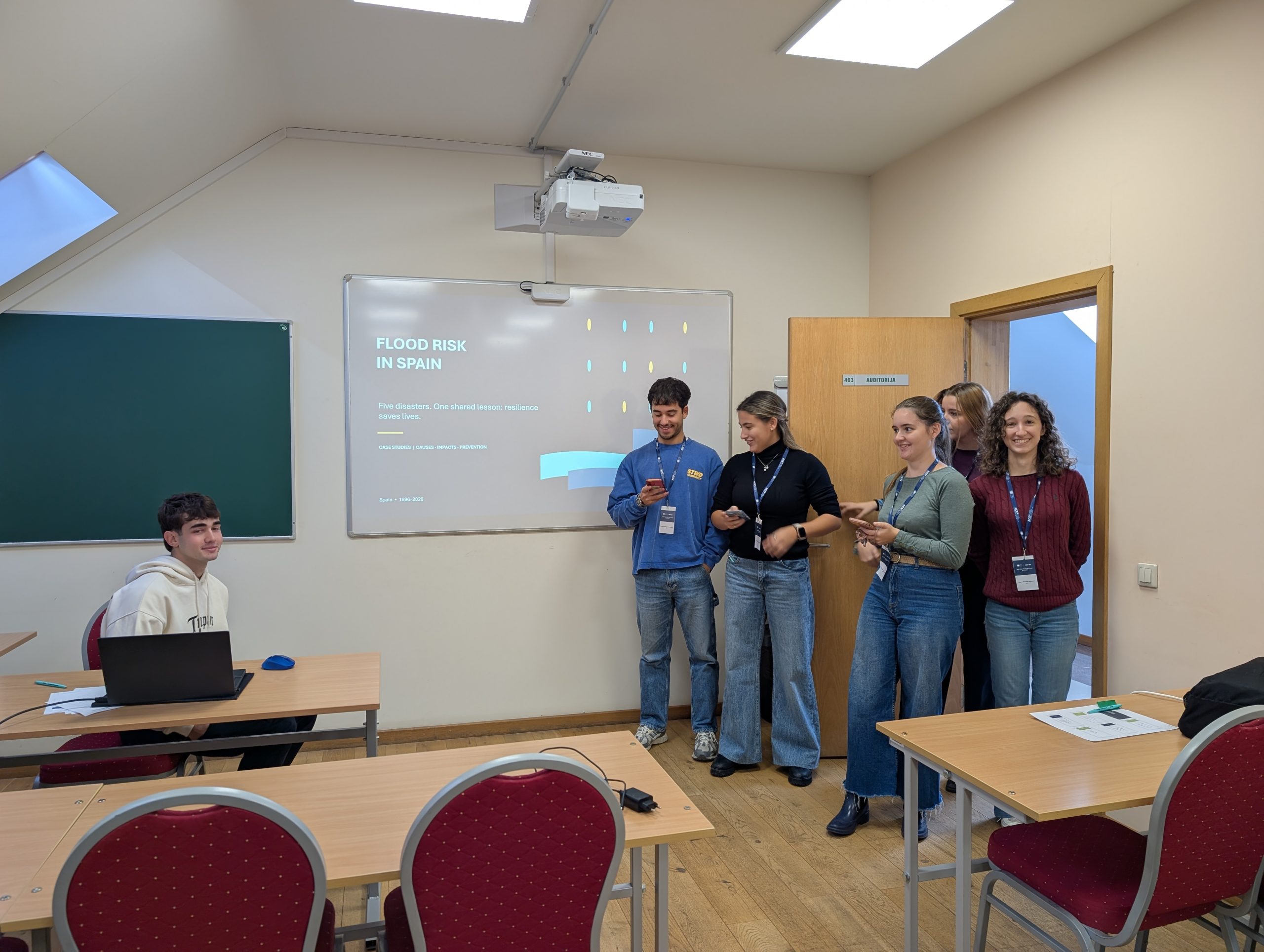
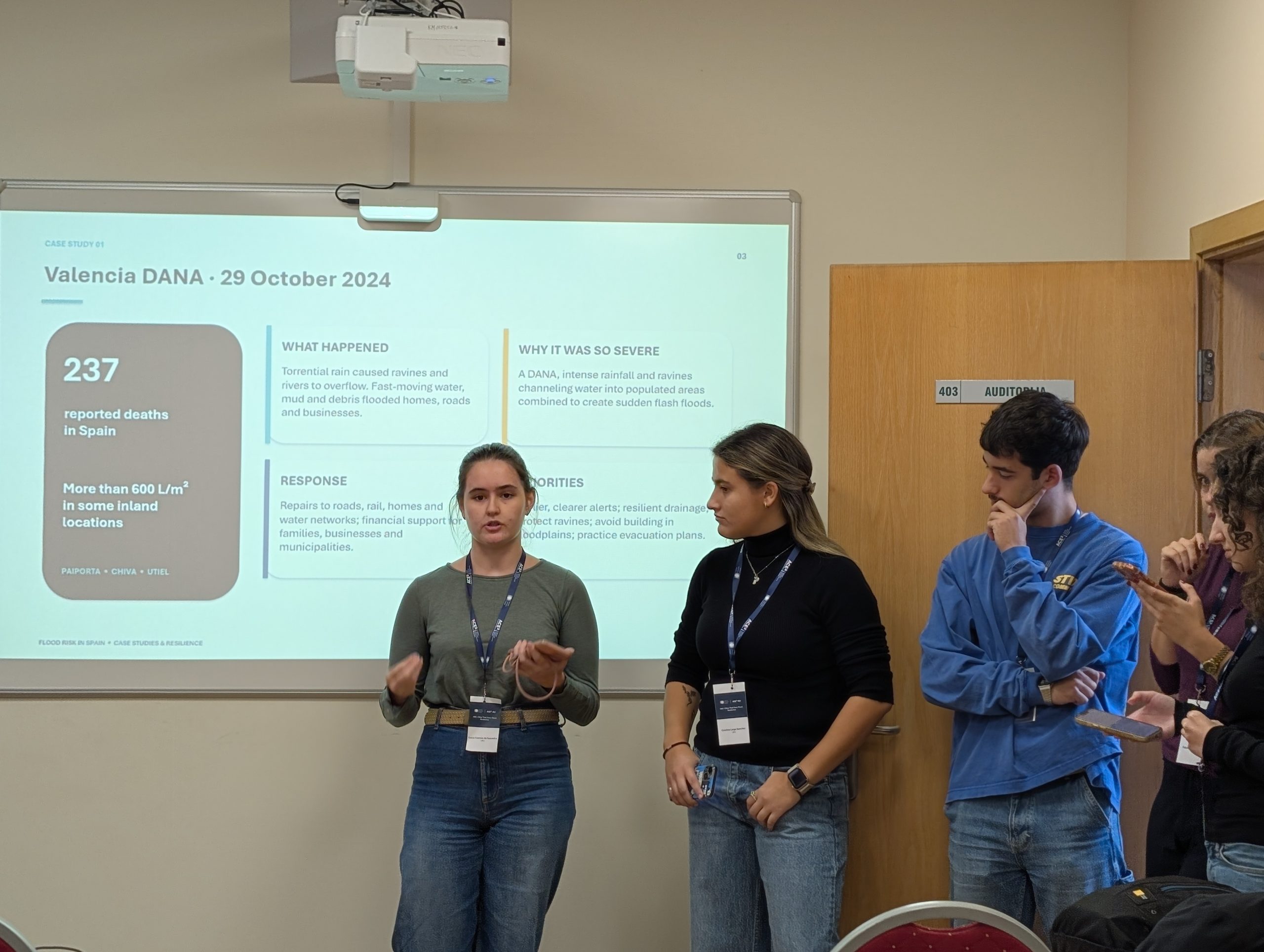
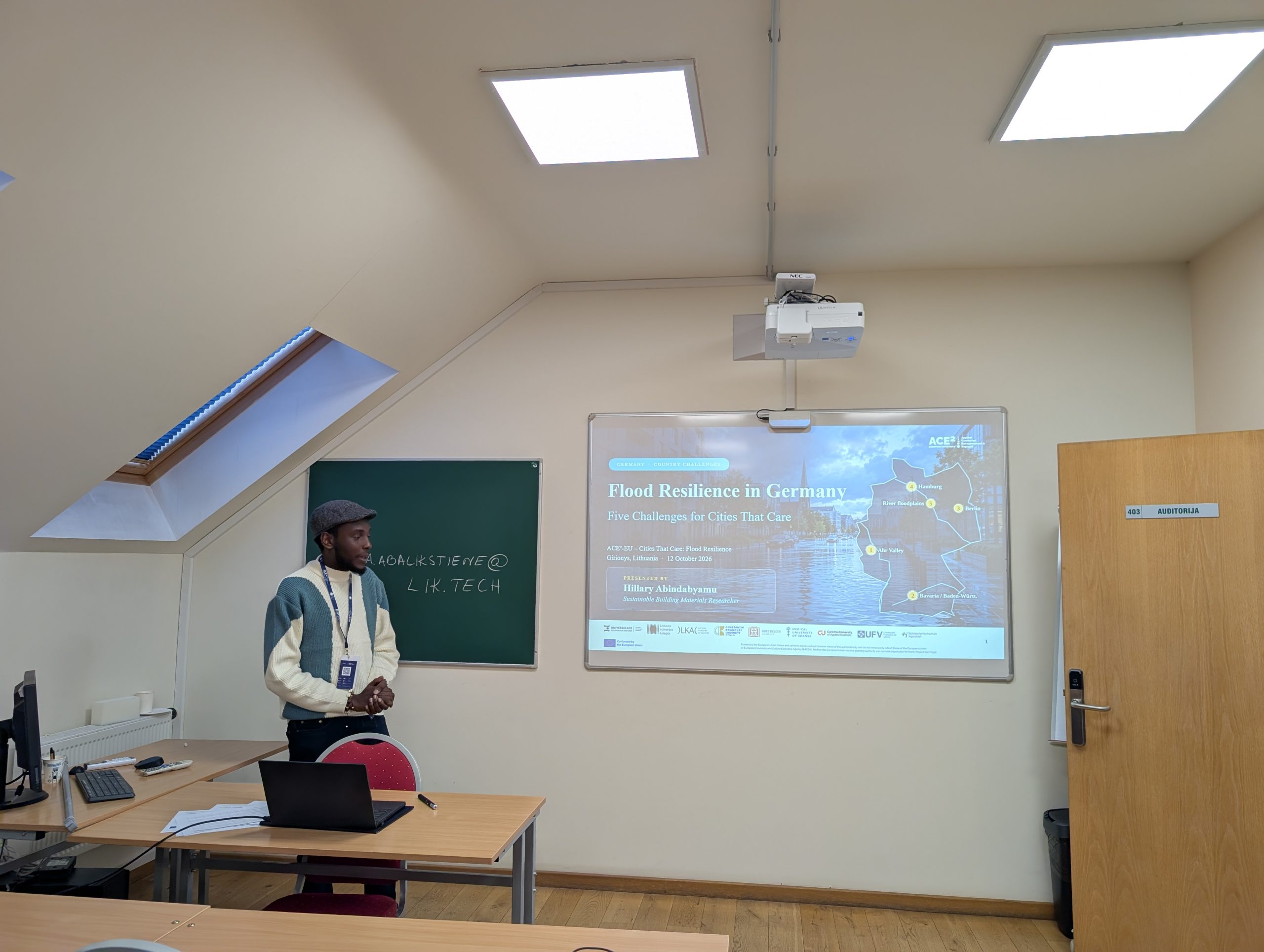
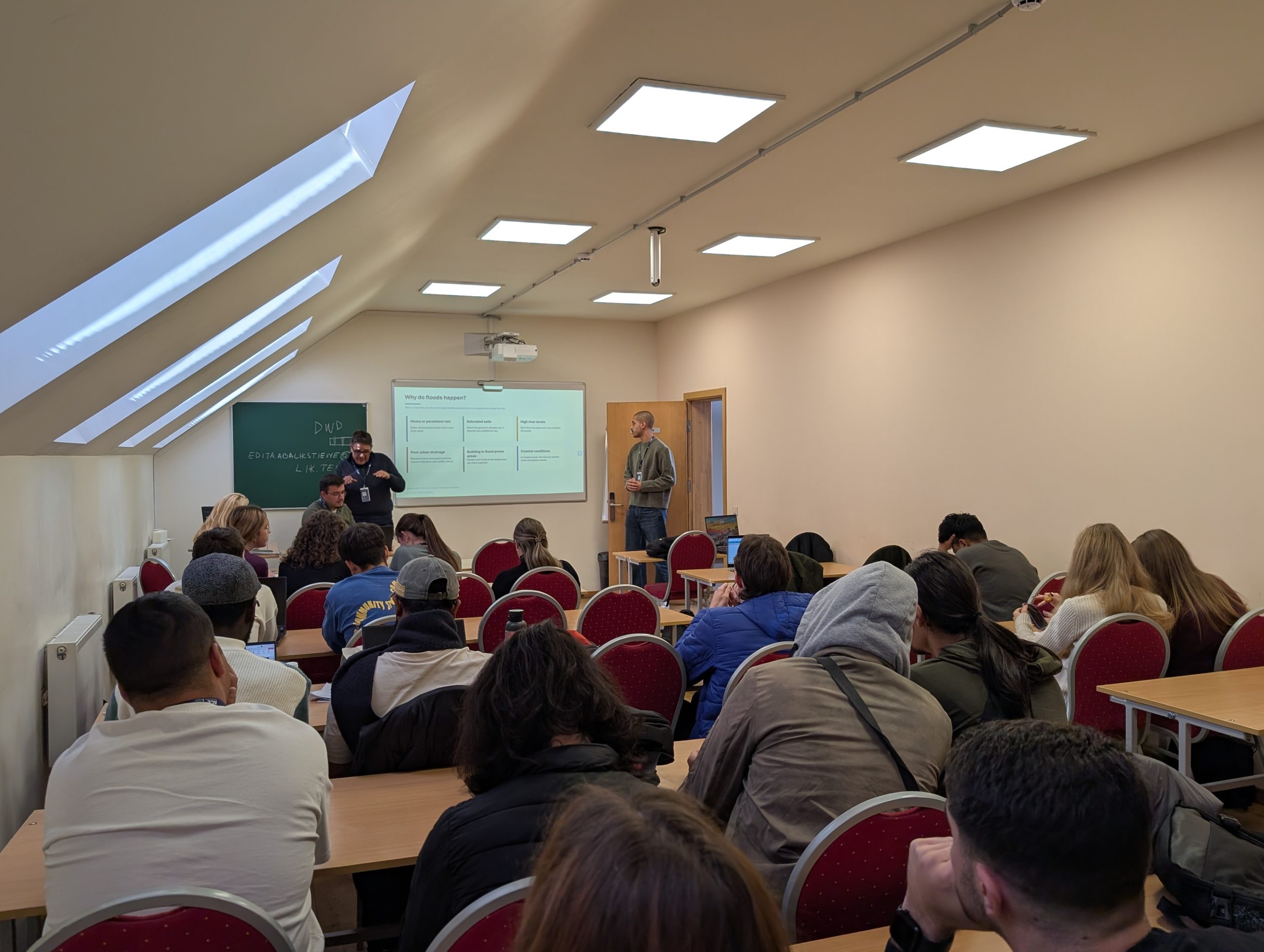
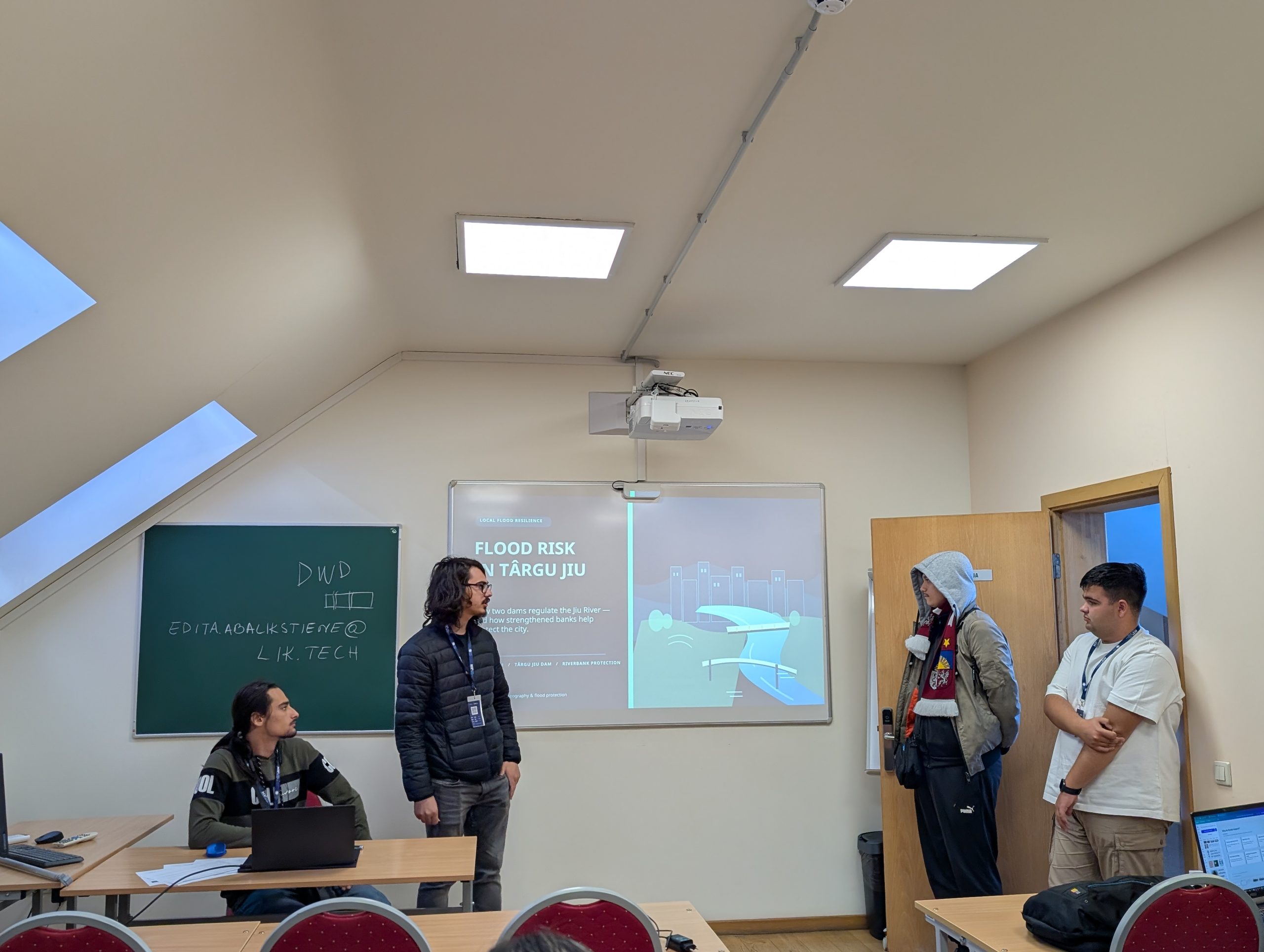
The first day of the programme took place in Girionys, where students presented flood-related and climate-change challenges affecting their respective countries. These presentations provided an opportunity to exchange experiences and examine the different environmental conditions and challenges faced by European communities. Assoc. Prof. Dr Egidijus Kasiulis from LIK also delivered a session on the impacts of climate change on hydrological regimes and flood risk, introducing participants to key factors influencing flooding.
Throughout the week, students are exploring a range of topics related to climate-resilient urban development, including sustainable stormwater management, green infrastructure, territorial planning, geographical information systems (GIS) and hydraulic structures for flood-risk management.
Connecting Theory with Real-World Challenges
A key component of the ABC Programme is the opportunity to apply theoretical knowledge in real-world settings through field visits and practical observations.
Participants will visit the Kavarskas Hydroelectric Power Plant and Dam to explore hydraulic infrastructure and its relationship with water management. In Anykščiai, they will examine the urban and river environment, including the landscape of the Šventoji River Valley, with a focus on climate-resilient urban and territorial planning.
The programme also includes a visit to the Kaunas Wastewater Treatment Plant, operated by JSC “Kauno vandenys”, as well as a guided urban flood-risk observation walk through Kaunas Old Town, Santaka Park and Nemunas Island. These activities will provide insights into urban water management and the relationship between natural landscapes, infrastructure and flood resilience.
At Kaunas Meteorological Station, students will learn about meteorological observations and hydrometeorological data, while dedicated sessions on GIS and hydraulic structures will further develop their understanding of flood-risk assessment and management.
International Collaboration for More Resilient Cities
Beyond developing technical knowledge, the programme encourages students to exchange perspectives, collaborate across disciplines and explore how different approaches can contribute to more sustainable and climate-resilient communities.
The programme will conclude on 16 October with final group presentations, during which participants will share the outcomes of their collaborative work and reflect on the knowledge gained throughout the week.
Through initiatives such as “Cities That Care: Flood Resilience”, the ACE²-EU Alliance continues to promote challenge-based learning, international cooperation and the development of practical skills needed to address shared European challenges.