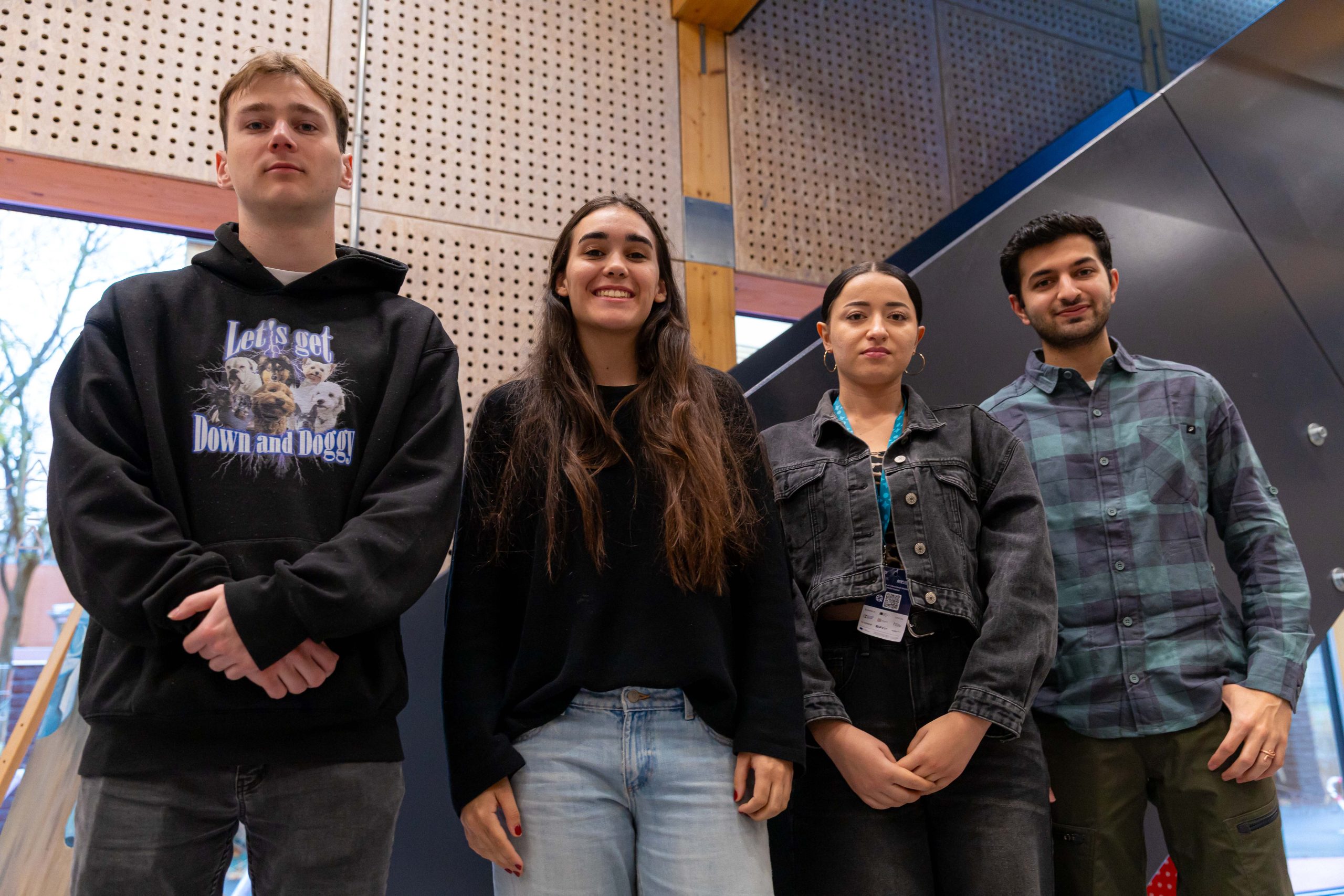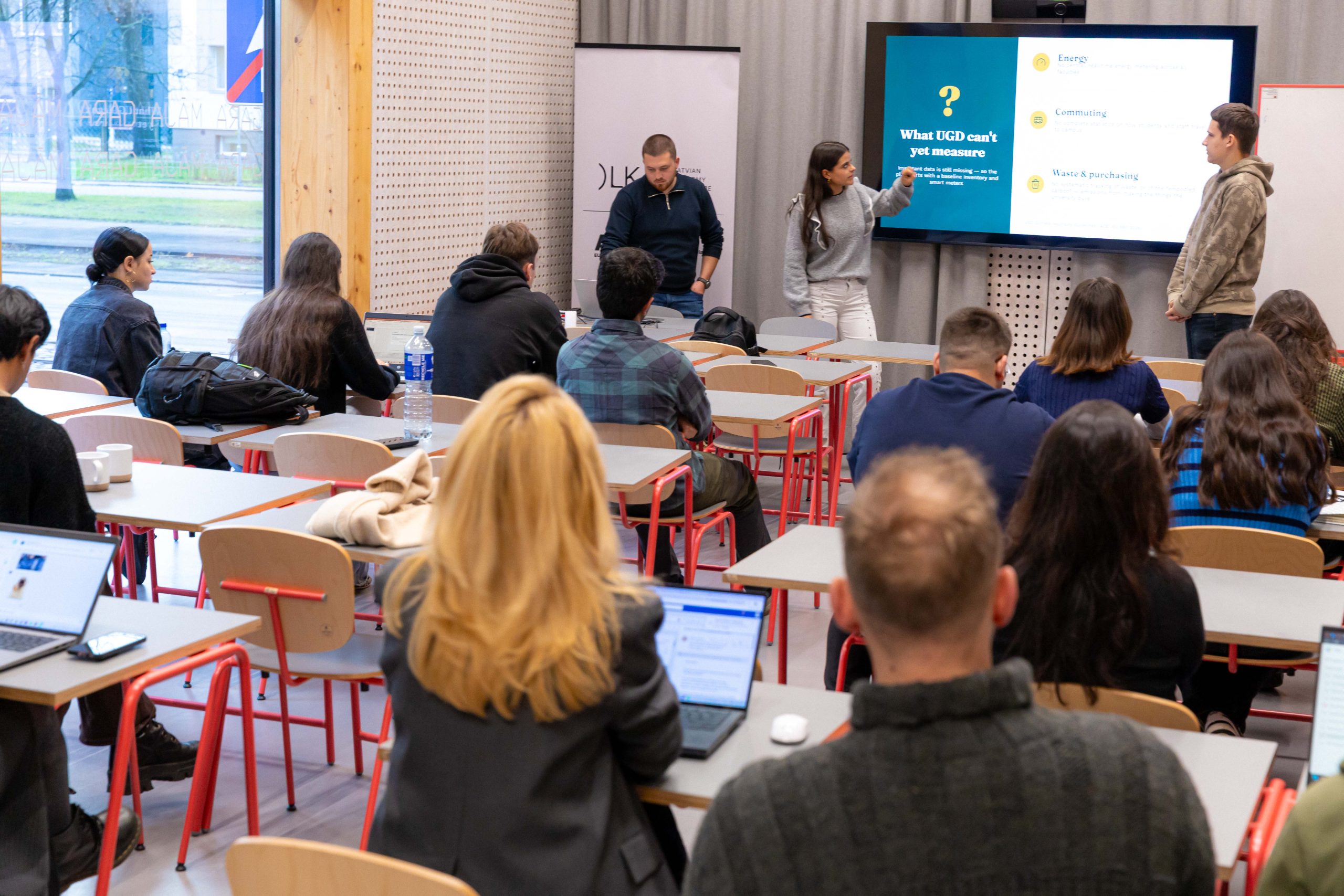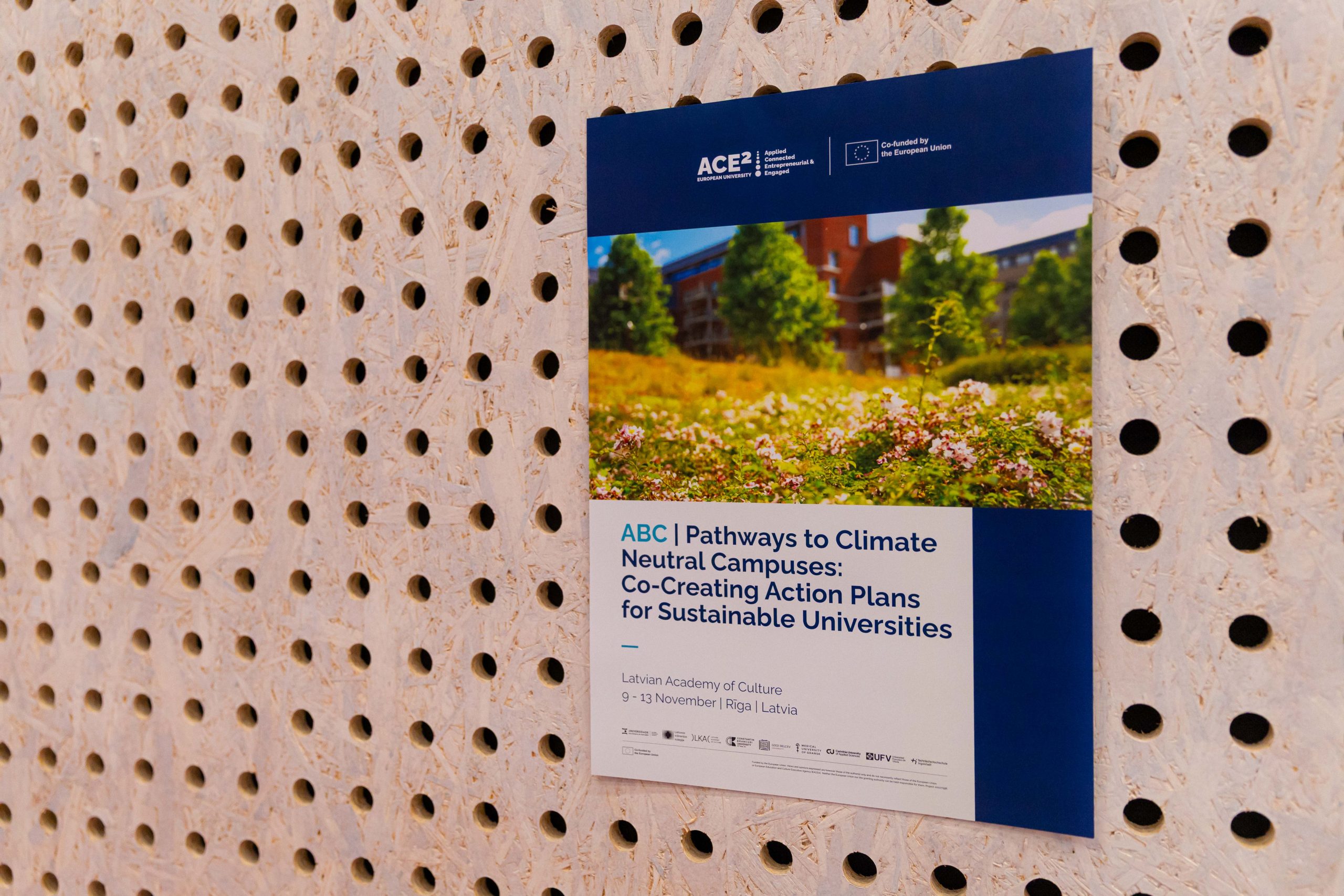
From 9 to 13 November, the Latvian Academy of Culture (LAC) hosted the international microlearning programme “Pathways to Climate-Neutral Campuses: Co-Creating Action Plans for Sustainable Universities”, organised within the ACE²-EU European University Alliance. During the programme, participants from universities across Europe analysed the environmental impact of higher education institutions and jointly developed proposals to help universities become more climate-neutral and sustainable.
“This week was extremely valuable and successful, as for some students it was the first time they had examined their home universities’ documents in depth and explored information related to climate neutrality within their institutions. They not only gained access to new data but also acquired knowledge about how to put these changes into practice,” reflected Gitana Vyčienė, Dean of the Faculty of Environmental Engineering at the Lietuvos inžinerijos kolegija Higher Education Institution.
One of the programme’s key outcomes was the development of six sets of climate neutrality guidelines for six ACE²-EU partner universities: Technische Hochschule Ingolstadt (Germany), Carinthia University of Applied Sciences (Austria), Universidad Francisco de Vitoria (Spain), Lietuvos inžinerijos kolegija Higher Education Institution (Lithuania), Goce Delčev University (North Macedonia), and Constantin Brâncuși University of Târgu Jiu (Romania). Drawing on sustainability data, institutional analyses, and examples of good practice from across Europe, the student teams developed practical recommendations for reducing the environmental impact of universities.
The guidelines place particular emphasis on strengthening climate governance and defining institutional responsibilities, improving energy efficiency in university buildings, expanding the use of renewable energy, enhancing resilience to climate change, promoting sustainable mobility, reducing transport-related emissions, and advancing waste reduction, recycling, and circular economy principles. They also highlight the importance of sustainability monitoring, transparent reporting of results, and the active involvement of the entire university community in achieving climate goals.
The students emphasised the need for reliable baseline data and measurable climate targets, while recognising that meaningful change can only be achieved through the active engagement of students, academic staff, university leadership, and external stakeholders. Their proposals include implementation frameworks, governance approaches, monitoring indicators, and short-term action plans that can be adapted to the specific needs of each institution.
The guidelines will serve as a foundation for further discussions and joint action within the ACE²-EU Alliance, supporting partner universities in their transition towards more sustainable, resilient, and climate-neutral campuses. By combining international collaboration, interdisciplinary learning, and practical problem-solving, the programme enabled students to take an active role in shaping a more sustainable future for higher education.
Funded by the European Union. Views and opinions expressed are, however, those of the author(s) only and do not necessarily reflect those of the European Union or the European Education and Culture Executive Agency (EACEA). Neither the European Union nor EACEA can be held responsible for them. Project No. 101177596.