
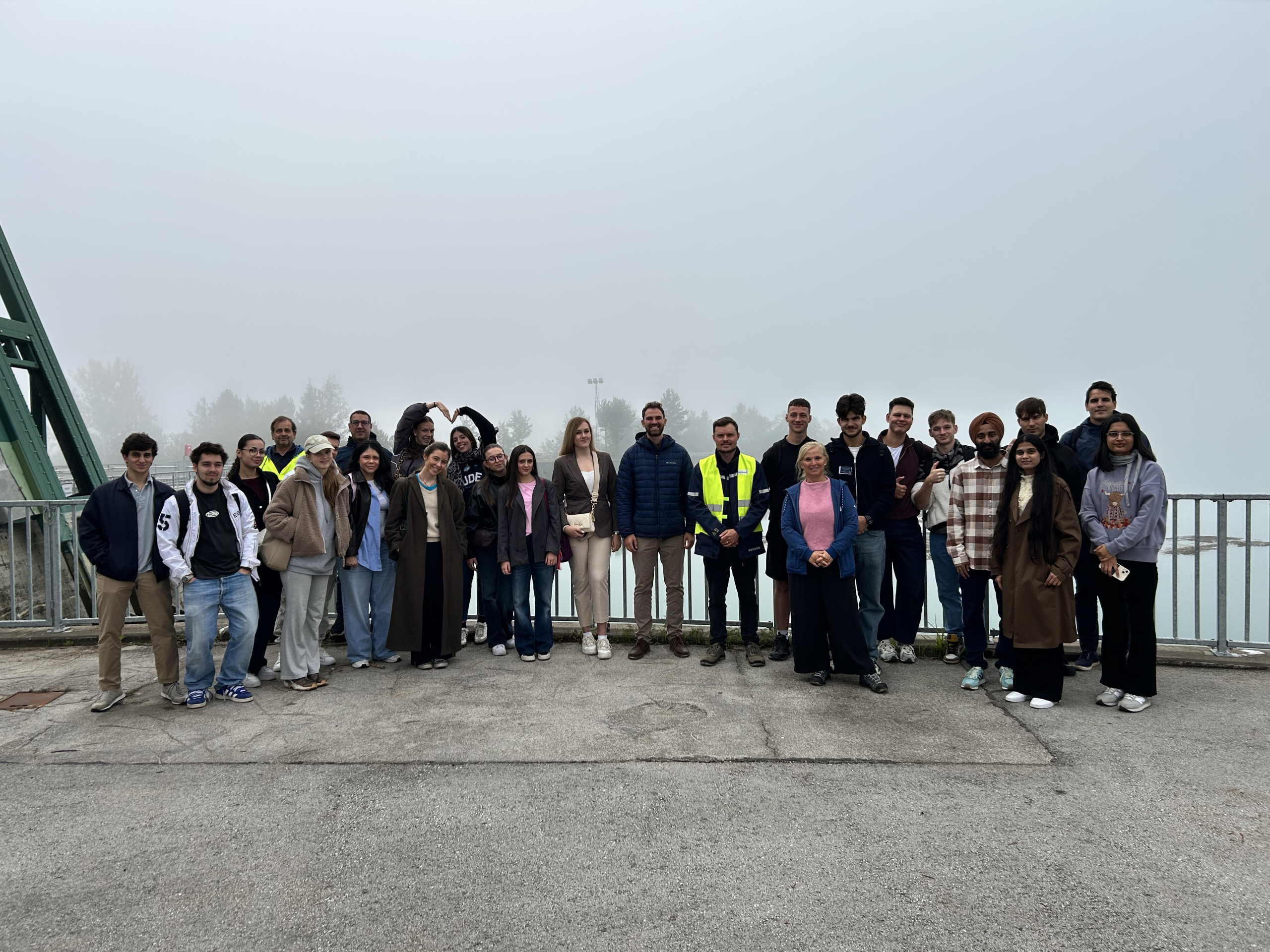
CUAS is hosting students from partner universities from 5 to 9 October 2026 for the Flavour School ‘Renewable Energy Infrastructure and Nature Conservation’. The course brings together students from diverse academic and professional backgrounds to explore the challenges and opportunities arising from the transition to renewable energy and its impact on nature conservation.
As part of the European Green Deal, the European Union aims to become climate neutral by 2050. The transition to renewable energy will play a central role in achieving this ambitious goal. However, the development of renewable energy infrastructure and the associated pressure on land use can have significant impacts on species, habitats and ecosystems. Examples include hydropower plants affecting fish migration, wind turbines posing risks to birds and bats, and grid expansion affecting sensitive biotopes and habitats.
Throughout the course, students will explore these conflicts through a combination of online learning, theoretical sessions, fieldwork and challenge-based project work. The programme will begin with an introduction to key concepts, participants and guiding questions, allowing students to share their existing knowledge and perspectives on the topic.
During the on-site sessions at CUAS and at various locations across Carinthia, students will examine European case studies and visit hydropower plants, wind farms and other sites that demonstrate both the challenges and opportunities associated with renewable energy development. Through practical observations and discussions, students will gain a deeper understanding of the complex relationship between the energy transition and nature conservation.
The course included workshops focusing on the dilemma between expanding renewable energy infrastructure and protecting habitats and species. By the end of the course, students will be able to critically reflect on these challenges and develop collaborative approaches to balancing climate action with the protection of biodiversity and ecosystem services. The course aims to foster knowledge exchange and interdisciplinary collaboration among future planners, engineers, conservationists and other stakeholders involved in shaping a sustainable energy transition.